Propane Tank Installation Camp Hill: 10 Best Expert Tips to Choose the Right Size
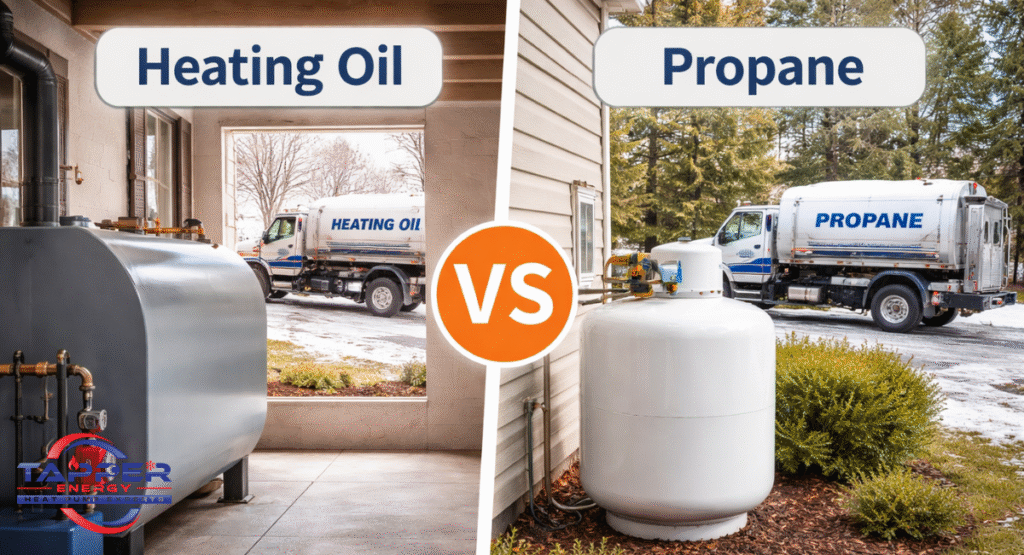
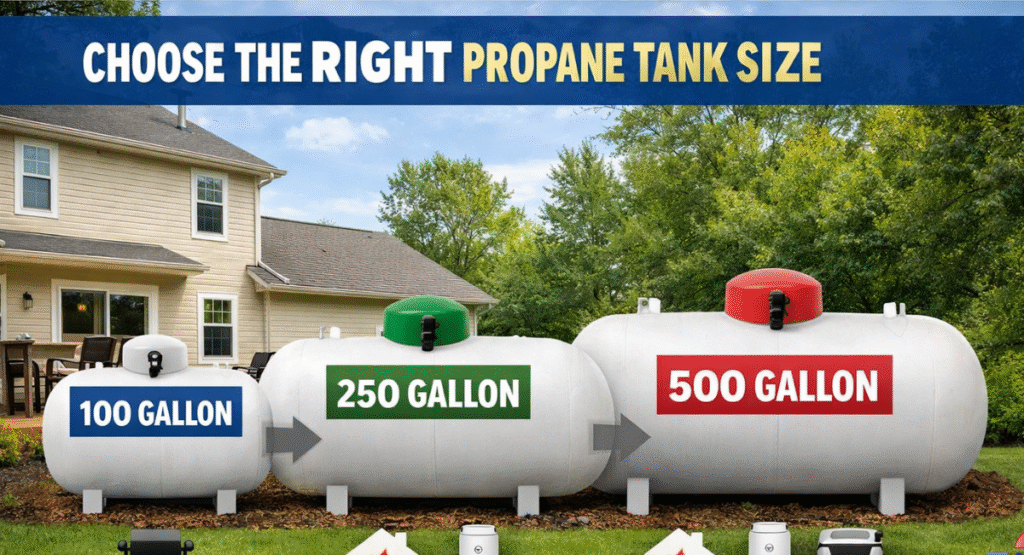
Propane tank installation Camp Hill homeowners trust starts with knowing your home’s actual energy needs. You are standing in your backyard near Market Street Camp Hill, staring at the space between the fence and the patio. Will a tank even fit here? Which size makes sense for your household? These questions come up for thousands of homeowners across the West Shore PA region every single year. Getting the answer right means cozy winters and lower fuel bills. Getting it wrong means overpaying for capacity you will never use — or worse, running dry during a bitter January cold snap. This guide covers everything you need. From 120-gallon “DOT” cylinders for modest setups to 1,000-gallon tanks for sprawling estates, each option serves a purpose. You will also learn about BTU load calculation, Cumberland County zoning, safety setbacks, and frost line depth requirements. Whether you are asking “what size propane tank for a 3-bedroom house?” or “do I need a permit for a propane tank in Camp Hill?”, every answer is right here. For personalized guidance, the experts at Tapper Energy are always ready to help. Table of Contents Planning Your Propane Tank Installation Camp Hill: Where to Start? The first step toward a successful propane tank installation Camp Hill project is not picking a tank. It is understanding your home inside and out. Walk through every room and count each appliance that runs on propane. Your furnace, water heater, stove, dryer, and fireplace all consume fuel at different rates. Write those numbers down. This simple inventory becomes the foundation of your entire sizing decision. Too many homeowners skip this step and default to the biggest tank they can afford. Bigger is not always better — especially on a compact Borough lot. Think about your property next. The Borough of Camp Hill features a mix of historic homes with narrow side yards and newer builds with more generous layouts. Your lot dimensions, existing landscaping, and proximity to property lines all dictate where a tank can go. A quick measurement of your available outdoor space narrows your options immediately. Combine that with your appliance inventory and you have already eliminated guesswork. That is exactly how the professionals at Tapper Energy approach every installation across the Capital City Region. Understanding Common Propane Tank Sizes for Central PA Homes Propane tanks come in four standard residential sizes. Each serves a different type of household and energy demand. The table below gives you a quick snapshot. Tank Size Best For Estimated Annual Usage 120 Gallon Cooking, fireplaces, grills Under 500 gallons/year 250 Gallon Furnace + 1–2 appliances 500–800 gallons/year 500 Gallon Whole-home heating 800–1,500 gallons/year 1,000 Gallon Large estates, pools, generators 1,500+ gallons/year Understanding these sizes helps you ask better questions when you call a provider. You will already know which category fits your lifestyle across the Susquehanna Valley. 120-Gallon Tanks: Ideal for Cooking and Fireplaces The smallest option is the 120-gallon “DOT” cylinder. DOT stands for Department of Transportation. These tanks meet federal standards for portable and semi-permanent use. They stand upright, making them a smart choice when considering vertical vs. horizontal tanks in tight spaces. If your home uses natural gas or electric heating but you want propane for a kitchen range or fireplace, this size handles it beautifully. However, a 120-gallon tank runs out quickly if you push it beyond its purpose. Think of it as a supplemental tank rather than a primary fuel source. Many homeowners near Hampden Township and Lower Allen pair these with an existing electric HVAC system. 250-Gallon Tanks: The Middle Ground for Moderate Energy Use Stepping up to a 250-gallon tank opens the door to moderate whole-home propane use. This size supports a furnace combined with a water heater or cooking range comfortably. It is the sweet spot for smaller Camp Hill homes, condominiums, and townhouses. If you have searched “what size propane tank for a 3-bedroom house?”, this is frequently the answer for homes under 1,800 square feet. The 250-gallon tank also introduces you to the tank gauge reading system. A dial on top shows the percentage of fuel remaining. The industry follows the 80% fill rule, meaning your tank only gets filled to 80% capacity. This leaves room for the propane to expand safely in warm weather. 500-Gallon Tanks: The Standard for Whole-Home Heating in Camp Hill The 500-gallon ASME tank is the undisputed residential standard across Camp Hill and the broader West Shore PA area. ASME stands for the American Society of Mechanical Engineers. This size handles everything a typical household throws at it. Central heating, hot water, cooking, clothes drying, and even a best propane tank for home backup generator setup — it manages all of it. It delivers reliable performance without excessive bulk. If you are pairing your new tank with an upgraded furnace, the team at Tapper Energy’s HVAC services in Camp Hill can coordinate both projects seamlessly. The vaporization rate performs optimally at this volume for average residential demand. During cold snaps, smaller tanks can struggle to convert liquid propane to gas fast enough. A 500-gallon tank maintains steady vaporization even when Susquehanna Valley temperatures plummet well below freezing. 1,000-Gallon Tanks: Maximum Capacity for Large Estates When a 500-gallon tank is not enough, the 1,000-gallon model steps in. This tank serves large estates, homes with heated pools, and properties with guest houses. It is common on larger lots in Hampden Township and Lower Allen. If you have wondered about the cost of underground propane tank installation for a large property, this is typically the size that gets buried. The advantage is straightforward. Fewer deliveries and better bulk pricing. A 1,000-gallon tank lets you purchase propane during summer when pre-season rates drop significantly. Factors That Determine Your Perfect Propane Tank Size Choosing correctly requires evaluating three interconnected factors. Ignoring any one of them leads to a misfit installation that costs more over time. A professional BTU load calculation quantifies your total energy demand. BTU stands for British Thermal Unit. Your furnace