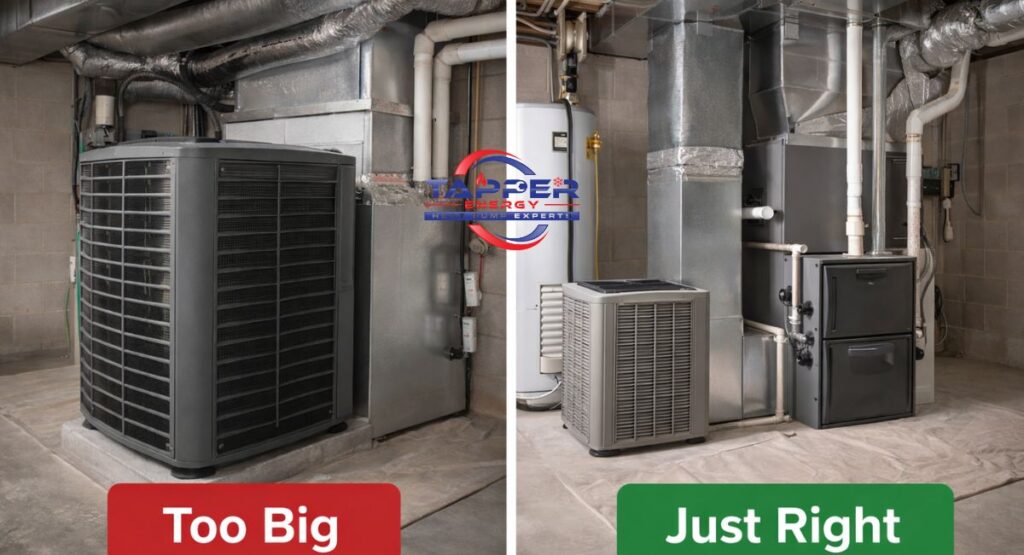
Finding reliable old home heating solutions in PA is one of the biggest challenges facing owners of Victorian and mid-century homes in Camp Hill, New Cumberland, and Harrisburg. Your home wasn’t built for modern ductwork — and forcing a standard furnace system into it means tearing out walls, dropping ceilings, and blowing past your renovation budget.
We’ve been inside hundreds of homes like yours across New Cumberland, Marysville, and the older neighborhoods of Harrisburg. The problem isn’t your home — it’s that it was never designed for a modern forced-air furnace system.
The good news: there are proven old home heating systems built specifically for homes like yours. This guide breaks down the two best options — and helps you figure out which one is right for your situation.
Why Old Home Heating in PA Is Different From the Rest of the Country
Most Victorian and mid-century homes in Camp Hill and New Cumberland were built around boilers, radiators, or floor registers — none of which use the wide metal ductwork a modern gas furnace needs. To retrofit that ductwork today, you’d be opening up walls, dropping ceilings, and burning through a renovation budget that quickly hits five figures.
We see this pattern constantly in the older homes along Market Street in New Cumberland, or in the Victorian two-stories near the Camp Hill borough center. The existing layout simply doesn’t leave room for a traditional duct system — not without major disruption.
Beyond ductwork, there’s another Central PA reality: humidity from the Susquehanna River corridor. Old stone and brick foundations already fight moisture year-round. The last thing you want is a system that adds duct condensation to the equation.
Old Home Heating Solutions: Ductless Mini-Splits vs. High-Velocity Systems
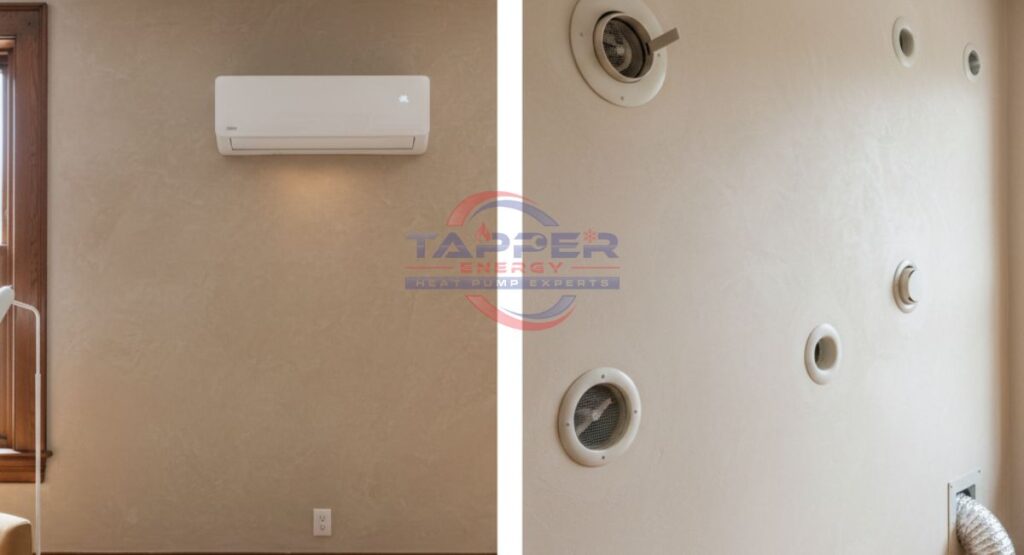
When a traditional system isn’t an option, two technologies step in to do the job properly — without gutting your home:
- Ductless Mini-Split Heat Pumps — wall-mounted units that heat and cool individual rooms or zones, with no ductwork at all.
- High-Velocity (Small-Duct) Systems — a central system using narrow, flexible 2-inch tubing that snakes through existing walls, floors, and ceilings.
Both are excellent options. Homeowners searching for old home heating in PA often assume a full renovation is unavoidable — but with either of these systems, it isn’t. Which one wins for your home depends on your layout, your budget, and how much room-by-room control you want.
Option 1: Ductless Mini-Split Heat Pumps
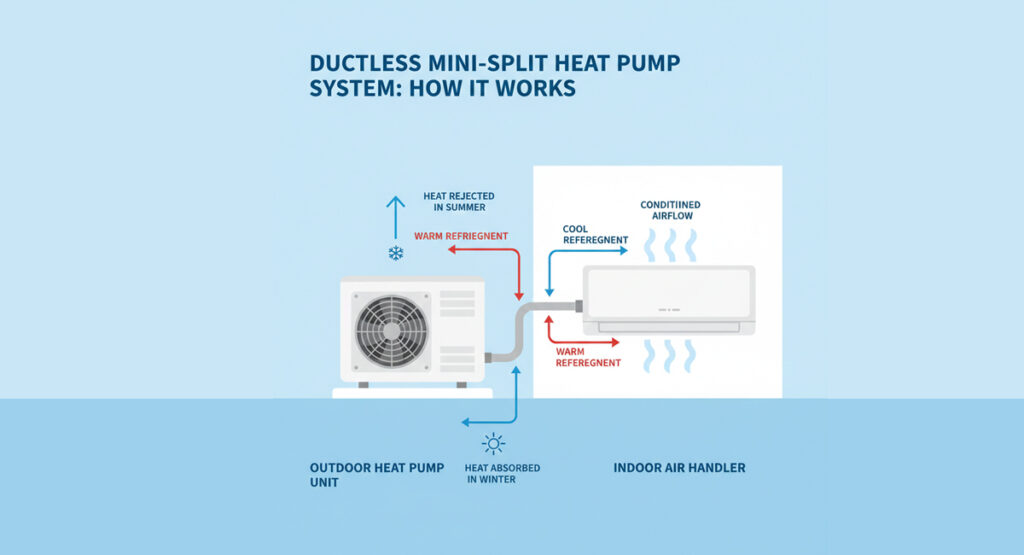
How It Works
A ductless mini-split has two parts: an outdoor compressor unit and one or more indoor air handlers mounted high on the wall. A small 3-inch conduit connecting them carries refrigerant, power, and a condensate drain. That’s it — no ductwork, no major construction.
Instead of one big central system trying to heat every room equally — and usually failing in a 100-year-old floor plan — each mini-split unit serves its own zone. Your bedroom can be 68°F while the home office runs at 72°F. You set it. The unit remembers.
Ductless Systems in Central PA: What You Need to Know
Here’s the honest reality about heat pumps in Pennsylvania winters: standard models struggle when temperatures drop below 25–30°F. We regularly see lows in the mid-teens around Marysville and along the river towns in January and February — that’s when older heat pump technology would let you down.
The solution is a cold-climate mini-split rated for operation down to -13°F or lower. Paired with a backup electric resistance strip heater or a small gas unit, these systems handle Central PA winters reliably. We never install a mini-split in this area without discussing backup heat strategy first — that’s just the right way to do this job.
Best candidates for ductless mini-splits:
- Room additions or sunrooms that were never connected to the main system
- Carriage houses, garages, or in-law suites being converted to living space
- Homes with a working boiler or radiator system that needs supplemental heating for a few problem rooms
- Homeowners who want zone-by-zone control and lower monthly energy bills
👉 Interested in a ductless installation estimate? Contact us
Option 2: High-Velocity (Small-Duct) Systems
How It Works
A high-velocity system uses a central air handler — typically tucked in an attic, basement, or closet — and distributes conditioned air through narrow, insulated tubes about 2 inches in diameter. Those tubes flex and bend through wall cavities, floor joists, and tight spaces that would be impossible to route standard 12-inch ductwork through.
Think of it this way: a garden hose moves a lot of water slowly through a big opening. A pressure washer nozzle moves water fast through a tiny opening. High-velocity systems work the same way — small, high-speed outlets create gentle whole-room circulation that eliminates hot and cold spots more effectively than traditional systems.
The outlets are small — about the size of a hockey puck — and sit flush in ceilings, floors, or walls. In the old Victorians in Camp Hill we service, we’ve run high-velocity tubing from a basement air handler all the way to the third floor without opening a single wall.
High-Velocity Systems: The Honest Pros and Cons
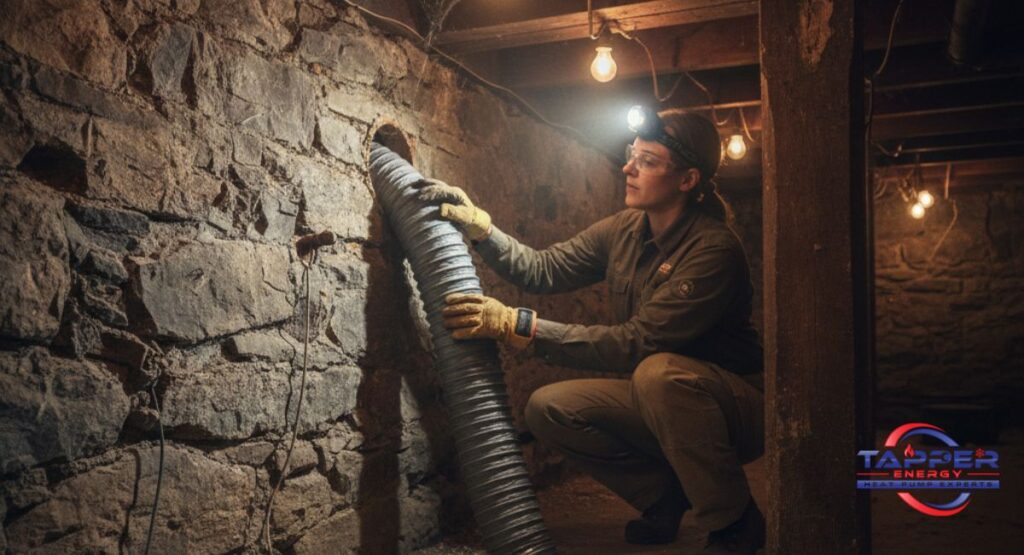
The major advantage is that you get a whole-home solution — heating and cooling from a single central system, just like a traditional forced-air setup. It also handles humidity better than ductless-only solutions, which matters in our Susquehanna Valley summers.
The trade-off: high-velocity systems cost more upfront than a single-zone ductless installation. Installation is also more involved — crews will need attic and basement access and some drilling between floors, though nothing close to a full renovation.
Best candidates for high-velocity systems:
- Homes where whole-house heating AND cooling from one system is the priority
- Multi-story Victorians or Colonials with accessible attic and basement space
- Owners who want to preserve interior character — plaster, wood trim, historic details — while modernizing HVAC
- Households with allergy sufferers — high-velocity systems excel at filtration and continuous air circulation
Quick Comparison: Ductless vs. High-Velocity
| Factor | Ductless Mini-Split | High-Velocity System |
|---|---|---|
| Ductwork Required? | No | No (uses small 2″ tubes) |
| PA Winter Performance | Excellent (cold-climate models) | Excellent |
| Whole-Home Coverage | Multi-zone, not always central | Yes — one system, all rooms |
| Zone Control | Excellent (per-unit) | Good (zoning add-on available) |
| Upfront Cost | Lower for partial coverage | Higher for whole-home |
| Aesthetic Impact | Wall-mounted unit visible | Small 2.5″ flush outlets only |
| Installation Time | 1–2 days (typical) | 2–5 days (whole home) |
So Which Old Home Heating Solution Is Right for You?
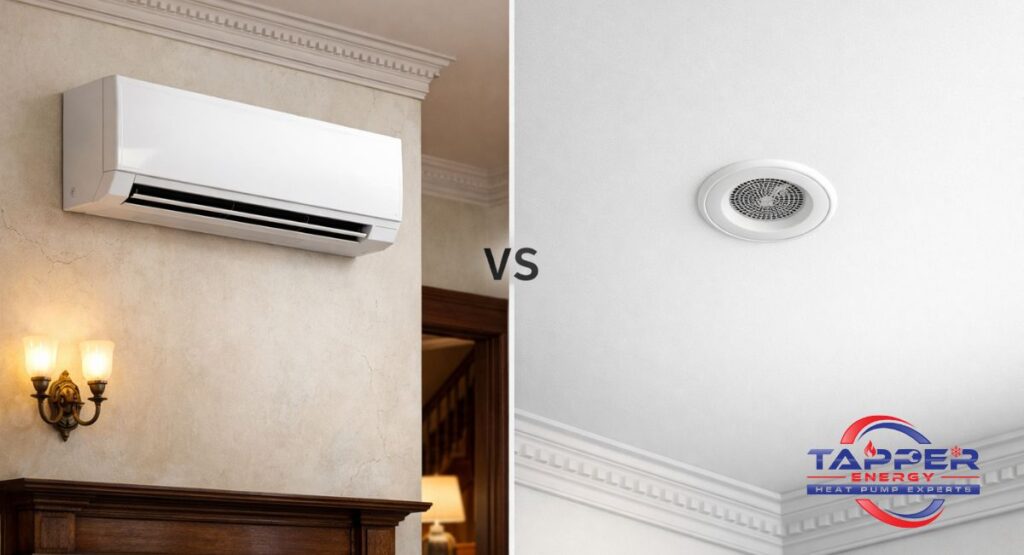
The most effective old home heating approach depends on one key question: are you solving one problem room, or replacing your whole heating strategy?
If your home already has a functional boiler or radiator system and you just can’t get the back bedroom or converted sunroom warm, a single-zone mini-split is often the fastest, cleanest fix. We can have it running in a day, and you’ll wonder why you suffered through three winters without it.
If you’re ready to replace an aging system entirely — or if your current setup is a patchwork of window units, space heaters, and a furnace on its last legs — a high-velocity system gives you whole-home consistency without tearing apart your historic home.
Still not sure? That’s exactly what our free home assessment is for. We walk through your home, look at the existing layout, and give you an honest recommendation — not just a pitch for whichever system has the best margin for us.
👉 Schedule your free assessment: Contact / Free Estimate Page
Don’t Forget: Maintenance Matters More in Old Homes
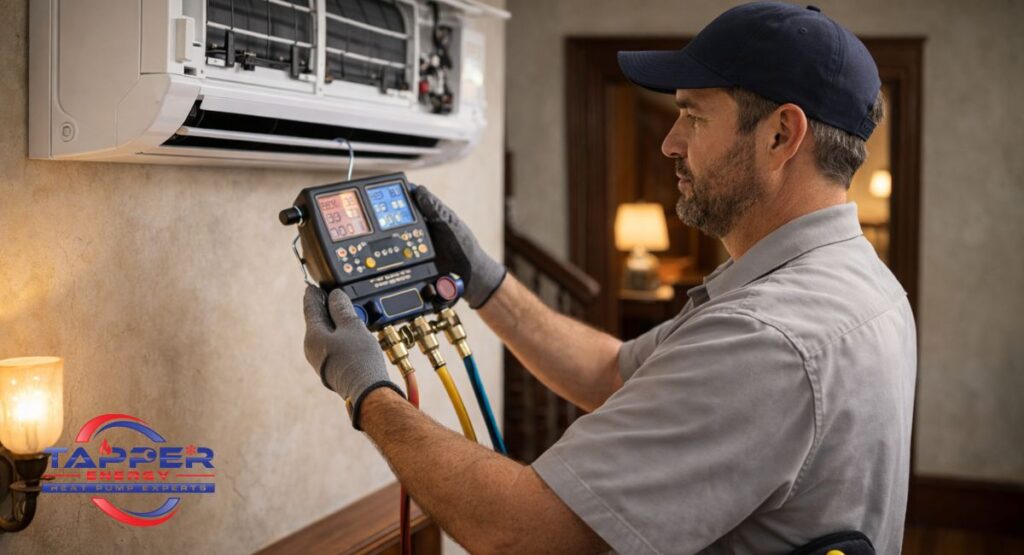
Old homes have character — and that character often includes older insulation, drafty window frames, and occasional surprises in the wall cavities. Even the best old home heating system will underperform if the building envelope is working against it.
We always recommend enrolling new system installations in a seasonal maintenance plan. A fall checkup before the first hard freeze — and a spring visit before cooling season — catches small issues before they become expensive ones. It also keeps your equipment warranty valid.
👉 Learn about our Comfort Care Maintenance Plan: Click here
Frequently Asked Questions
Can a ductless mini-split handle a full Pennsylvania winter on its own?
Yes — but only with the right unit. Standard heat pumps lose efficiency below freezing. A cold-climate mini-split rated to -13°F or lower will handle most Central PA winters without issue. That said, we always recommend a backup heat source for the coldest nights in January and February, especially in exposed areas like Marysville or river-facing properties. We discuss backup heat on every mini-split quote we write.
How much does ductless mini-split installation cost in Harrisburg, PA?
A single-zone installation in the Harrisburg area typically runs $3,000 to $5,500 installed, depending on unit capacity, brand, and installation complexity. Multi-zone systems run higher — $7,000 to $15,000+ depending on the number of zones. Most homeowners find the energy savings and year-round comfort pay the system off faster than expected.
Will a high-velocity system ruin the character of my historic Camp Hill home?
Not if it’s done right. High-velocity outlets are roughly 2.5 inches in diameter and sit flush with ceilings or floors. The tubing routes through existing cavities and floor joists without opening walls. We’ve installed systems in homes listed on the National Register of Historic Places with zero visible disruption to the original interior.
Are there rebates or tax credits available for these systems in Pennsylvania?
Yes. The federal Inflation Reduction Act provides a tax credit of up to 30% (capped at $2,000) for qualifying heat pump installations, including cold-climate mini-splits. Pennsylvania utility programs like PPL Electric’s EnergyWise and Met-Ed rebates add further savings. You can learn more about available federal heat pump tax credits at Energy.gov. We handle the rebate paperwork as part of our installation process — just ask when you call.
How long does installation take in New Cumberland?
A single-zone ductless installation takes 4 to 8 hours for a straightforward job — most homes have heat by end of day. Multi-zone systems or complex layouts might take two days. High-velocity whole-home systems typically run 2 to 5 days depending on home size. We give you a realistic timeframe during the estimate — no surprises on installation day.
Ready to Stop Fighting Your Home’s Heating?
Tapper Energy has been solving old home heating challenges in Camp Hill, New Cumberland, Harrisburg, and Marysville for over 20 years. We know these homes — the tight walls, the tricky layouts, the basements that always seem a little damp. Let’s walk through yours together.
📞 Call us: (717) 921-4822 🗓️ Or schedule online: Book Online