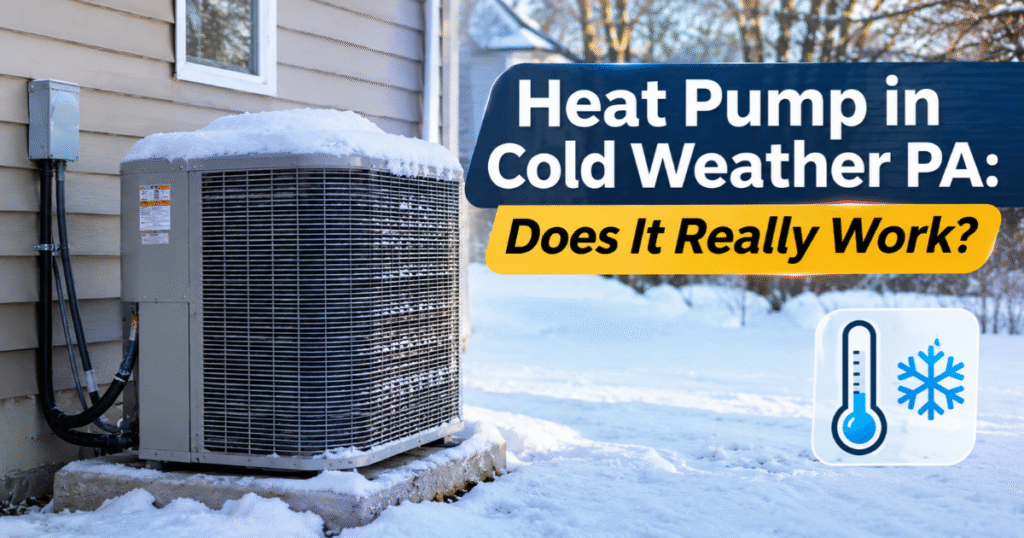
Yes, a heat pump in cold weather PA homeowners actually face keeps working, even on a 10°F night in Harrisburg, as long as it is a cold-climate model sized for your home. Older standard heat pumps lose a big share of their output as temperatures fall into the teens. Modern cold-climate units keep heating well below 0°F.
The bigger surprise is how rarely Central PA gets truly cold. Here are 7 proven facts, backed by NOAA weather data and Department of Energy field tests, so you can decide with real numbers instead of myths.
TL;DR
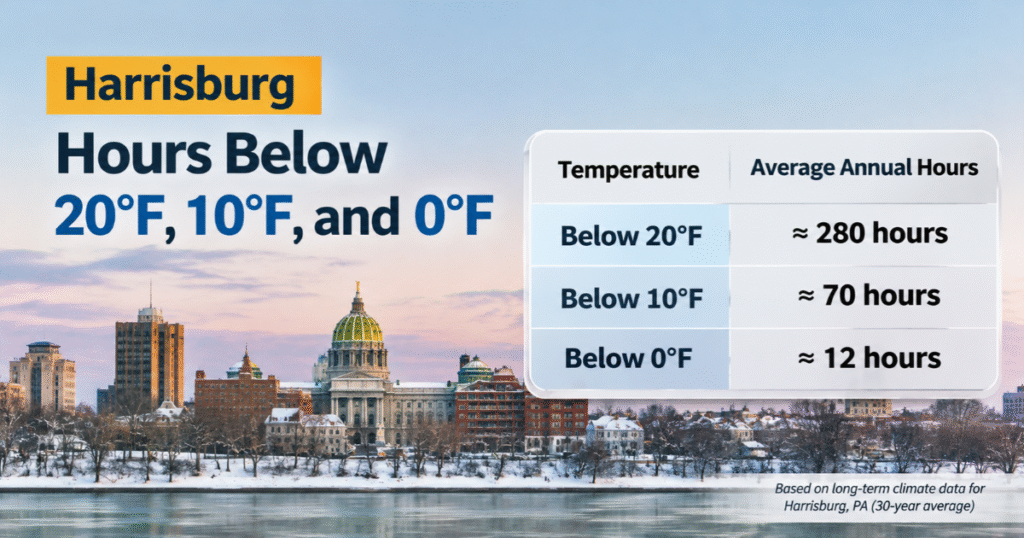
- Harrisburg rarely gets bitter cold: in an average year, Harrisburg International Airport records about 214 hours below 20°F, just 21 hours below 10°F, and no hours below 0°F (NOAA, 1989 to 2018).
- Equipment matters: a typical standard heat pump may deliver about 61% of its rated output at 17°F and 47% at 5°F, while cold-climate models hold roughly 83% to 100% at 5°F.
- The rule: choose an ENERGY STAR cold climate model, size it to Harrisburg’s 11°F to 16°F design temperature, and keep backup heat for rare cold snaps.
Thinking about a heat pump? Call Tapper Energy at (717) 921-4822 or request a free estimate online.
Table of Contents
- How a Heat Pump Pulls Heat from Freezing Air
- 7 Proven Facts About a Heat Pump in Cold Weather PA Homes
- Harrisburg Winter Temperatures vs Heat Pump Performance
- Best Heat Pump Setup for Central PA Cold
- Heat Pump in Cold Weather PA FAQ
- Talk to Tapper Energy
Heat Pump in Cold Weather PA: How Does It Pull Heat from Freezing Air?
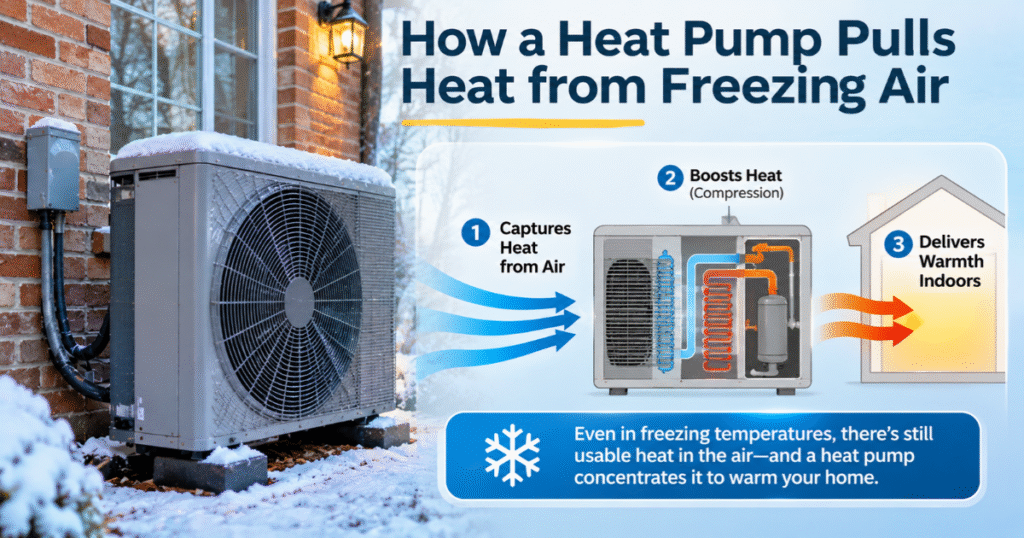
Even 10°F air still holds heat. A heat pump pumps refrigerant through its outdoor coil at a temperature colder than the outside air, so heat flows from the air into the refrigerant.
The compressor then squeezes that refrigerant, which raises its temperature, and the indoor coil releases the heat into your home. Because the system moves heat instead of burning fuel, it can deliver more than one unit of heat for every unit of electricity it uses.
The colder the outdoor air, the harder the compressor has to work. That is why the design of the heat pump, not just the weather, decides how a heat pump in cold weather PA winters bring will perform.
7 Proven Facts About a Heat Pump in Cold Weather PA Homes
1. Harrisburg Sees Only About 21 Hours a Year Below 10°F
NOAA’s engineering weather data for Harrisburg International Airport shows about 214 hours below 20°F in an average year. Only 21 of those hours fall below 10°F, and none fall below 0°F. That is about 2% of the year below 20°F.
Heating designers use a “design temperature” for sizing. For Harrisburg, NOAA lists 16°F at the 99% level and 11°F at the 99.6% level, which means the air stays warmer than that almost all winter. For anyone weighing a heat pump in cold weather PA conditions, that is the most important number to know.
2. Standard and Cold-Climate Heat Pumps Are Very Different
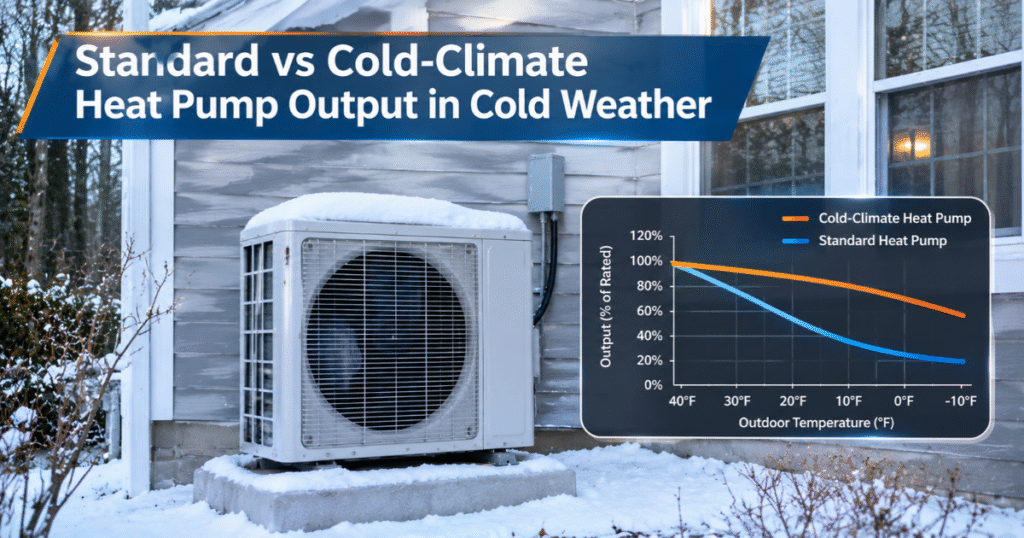
A standard heat pump loses output steadily as it gets colder. A cold-climate heat pump uses a variable-speed inverter compressor that ramps up to hold its output. The example below, published by the ICC Building Safety Journal, compares two 3-ton units rated at 47°F.
| Outdoor Temp | Standard Heat Pump Output | Cold-Climate Heat Pump Output | Backup Heat Likely? |
|---|---|---|---|
| 47°F | 100% | 100% | No |
| 35°F | 86% | 97% | No |
| 25°F | 75% | 94% | Sometimes with a standard unit |
| 17°F | 61% | 92% | Often with a standard unit |
| 5°F | 47% | 83% | Yes for standard, depends on sizing for cold-climate |
If you are shopping for a heat pump in cold weather PA, insist on a cold-climate model. Some do even better than this example. For instance, Mitsubishi rates its Hyper-Heating INVERTER (H2i) systems for 100% heating capacity at 5°F with operation down to -13°F.
3. Efficiency (COP) Drops as Temperatures Drop
Efficiency is measured as the coefficient of performance (COP). A heat pump in cold weather PA conditions still beats electric resistance heat, which has a COP of 1.0. To earn the ENERGY STAR cold climate designation, a heat pump must reach a COP of at least 1.75 at 5°F, and market-available cold-climate models test at about 1.75 to 2.25 at that temperature, according to Pacific Northwest National Laboratory.
4. Defrost Cycles Are Normal
Defrost is a normal part of running a heat pump in cold weather PA winters. In cold, damp weather, frost builds on the outdoor coil. The heat pump briefly reverses to melt it, and you may see steam and hear a whoosh. Lennox notes most systems check for frost every 30 to 90 minutes and a typical defrost runs 5 to 15 minutes. A solid block of ice that does not clear is not normal and needs service.
5. Backup Heat Covers the Coldest Hours
Most heat pumps in Central PA have backup heat, either electric heat strips in the air handler or a gas or propane furnace in a dual fuel setup. With a properly sized cold-climate unit, backup heat should run only during the rare coldest hours and during defrost. It is the safety net that keeps a heat pump in cold weather PA homes rely on comfortable during a cold snap.
6. Vent Air Feels Cooler Than a Furnace
Angi notes that furnaces traditionally deliver air around 120°F, while a heat pump delivers air between 90°F and 100°F. That air is still warming your home, but it can feel cool on your hand. The test is whether the house holds your thermostat setting.
7. Proper Sizing Matters More Than Brand
An undersized heat pump leans on backup heat too often, and an oversized one short cycles. A room-by-room load calculation (ACCA Manual J) sized to Harrisburg’s design temperature is what makes a heat pump in cold weather PA winters work smoothly. For price ranges, see our heat pump installation cost guide for Pennsylvania.
Want to know if a heat pump can carry your home? Tapper Energy installs cold-climate heat pumps across Central PA. Call (717) 921-4822 for a free estimate.
Heat Pump in Cold Weather PA: Harrisburg Winter Temperatures vs Performance
The table below uses NOAA’s 1991 to 2020 climate normals for Harrisburg International Airport. “Typical coldest night” is the average lowest temperature recorded in that month each year.
| Month | Avg High | Avg Low | Typical Coldest Night | Cold-Climate Heat Pump |
|---|---|---|---|---|
| November | 53.9°F | 35.8°F | 22.9°F | Full output, high efficiency |
| December | 43.3°F | 28.2°F | 14.6°F | Full output, more defrost cycles |
| January | 38.6°F | 23.0°F | 7.4°F | Strong output, backup on the coldest nights |
| February | 42.0°F | 24.7°F | 10.1°F | Strong output, backup rarely needed |
| March | 51.3°F | 32.3°F | 17.9°F | Full output |
Across the whole year, the typical coldest night in Harrisburg is about 5°F. That is exactly the test point used for cold-climate ratings, which is why a heat pump in cold weather PA winters produce is a realistic primary heat source here.
What Is the Best Heat Pump Setup for Central PA Cold?
There is no single best heat pump in cold weather PA homes all share. The right setup depends on your ductwork, your current furnace, and how drafty the house is.
Cold-Climate Ducted Heat Pump
Best for homes with good ductwork. Look for an ENERGY STAR cold climate model or one on the NEEP cold-climate heat pump list. In the DOE Cold Climate Heat Pump Challenge, Carrier reported that its units ran at 100% capacity at 0°F and operated reliably down to -13°F in homes in Syracuse, New York.
Mitsubishi Hyper-Heat Ductless
Best for older homes without ducts, additions, and rooms that never stay warm. Hyper-Heating models hold 100% of their heating capacity at 5°F. Learn more about our Mitsubishi Electric heating and cooling systems.
Dual Fuel: Heat Pump Plus Gas or Propane Furnace
Best if you already have a good furnace. The heat pump handles most of the winter, and the furnace takes over on the coldest nights. Compare both approaches in our guide to heat pump vs furnace in Central PA.
Heat Pump in Cold Weather PA FAQ
At what temperature does a heat pump stop working?
Most heat pumps keep running in the cold, but output falls. The ICC Building Safety Journal notes standard units may lose 30% to 50% of capacity at 17°F and more than half near 0°F. Cold-climate models go much further: Mitsubishi Hyper-Heat systems operate down to -13°F, and Carrier’s DOE challenge units ran reliably to -13°F in New York homes.
Do heat pumps work below zero?
Yes, cold-climate heat pumps do. Many are rated to keep heating at -13°F, although output and efficiency are lower than on a mild day. In Harrisburg this matters less than people think: NOAA’s engineering weather data shows an average year at Harrisburg International Airport with no hours below 0°F and only about 21 hours below 10°F.
Why does my heat pump blow cool air in winter?
Heat pump air usually leaves the vents at about 90°F to 100°F, compared with roughly 120°F from a furnace, so it can feel cool on your skin even while it heats the room. A short burst of cooler air can also happen during a defrost cycle. If the house will not hold the thermostat setting, call for service.
Is a heat pump in cold weather PA winters enough on its own?
For many well-insulated Central PA homes, a properly sized cold-climate heat pump can carry nearly the whole winter. Harrisburg’s heating design temperature is 11°F to 16°F, and cold-climate units keep most of their output at those temperatures. Most installers still include electric heat strips or a furnace as backup for rare cold snaps and defrost.
Do I need a backup furnace with a heat pump in PA?
Not always. A cold-climate heat pump with electric heat strips works well for many homes. If you already have a gas or propane furnace in good shape, keeping it as dual fuel backup is often the smartest choice, because it covers the coldest nights without the high cost of running electric strips.
How long does a heat pump defrost cycle last?
Lennox notes that a typical defrost cycle runs 5 to 15 minutes, and most systems check for frost every 30 to 90 minutes in heating mode. Steam and a whooshing sound during defrost are normal. If the outdoor coil stays covered in solid ice or defrost runs much longer, schedule a service call.
Want Heat Pump Comfort That Handles PA Winters? Talk to Tapper Energy
A heat pump in cold weather PA homeowners can trust starts with the right model and the right size. Our family-owned, local team will run a load calculation, show you cold-climate and dual fuel options, and explain what your home really needs.
Call (717) 921-4822 or request a free estimate online. Maintenance plan customers also get 24-hour emergency service.
About the Author
Written by the Tapper Energy HVAC team. Our technicians diagnose and repair furnaces, AC systems, boilers, and heat pumps across Harrisburg, Mechanicsburg, and Central PA.