Heat pump emergency heat is a backup setting that shuts off your heat pump and runs electric heat strips instead. It keeps you warm when the heat pump fails, but it can double or triple your PPL electric bill if you leave it on.
For homeowners in Harrisburg and across Central PA, the rule is simple: use heat pump emergency heat only when the outdoor unit has failed, is frozen solid, or is waiting on a repair. On an ordinary cold night, leave the thermostat on Heat.
TL;DR
- At PPL’s current residential price to compare of 13.079 cents per kWh, 15 kW heat strips cost about $1.96 an hour in supply charges alone, about 5 times a typical 3-ton heat pump in normal Heat mode.
- Heat pump emergency heat (EM Heat) is manual and locks out the compressor. Auxiliary heat (AUX) is automatic and runs alongside the heat pump.
- Harrisburg’s average January low is about 23°F (NOAA 1991 to 2020 normals), a temperature most modern heat pumps handle on their own.
Heat pump stuck on emergency heat? Call Tapper Energy at (717) 921-4822 for heat pump repair, or request a free estimate on a new system.
Table of Contents
What Is Heat Pump Emergency Heat?
A heat pump does not make heat. It moves heat from the outdoor air into your home, which is why the U.S. Department of Energy says an air-source heat pump can deliver up to three times more heat energy than the electricity it uses.
Most ducted heat pumps also have backup electric resistance coils, called heat strips, in the indoor air handler, sized from 5 to 20 kW. Heat pump emergency heat turns off the outdoor unit and runs only that backup.
Emergency Heat vs Auxiliary Heat (They Are Not the Same)
Auxiliary heat (AUX) is automatic. The thermostat adds heat strips in short bursts while the heat pump keeps running, usually during defrost or after a big setpoint jump.
Heat pump emergency heat, labeled EM Heat, is manual. You choose it, and it locks the compressor off completely. AUX helps a working heat pump. EM Heat replaces a broken one.
What “EM Heat” on Your Thermostat Actually Does
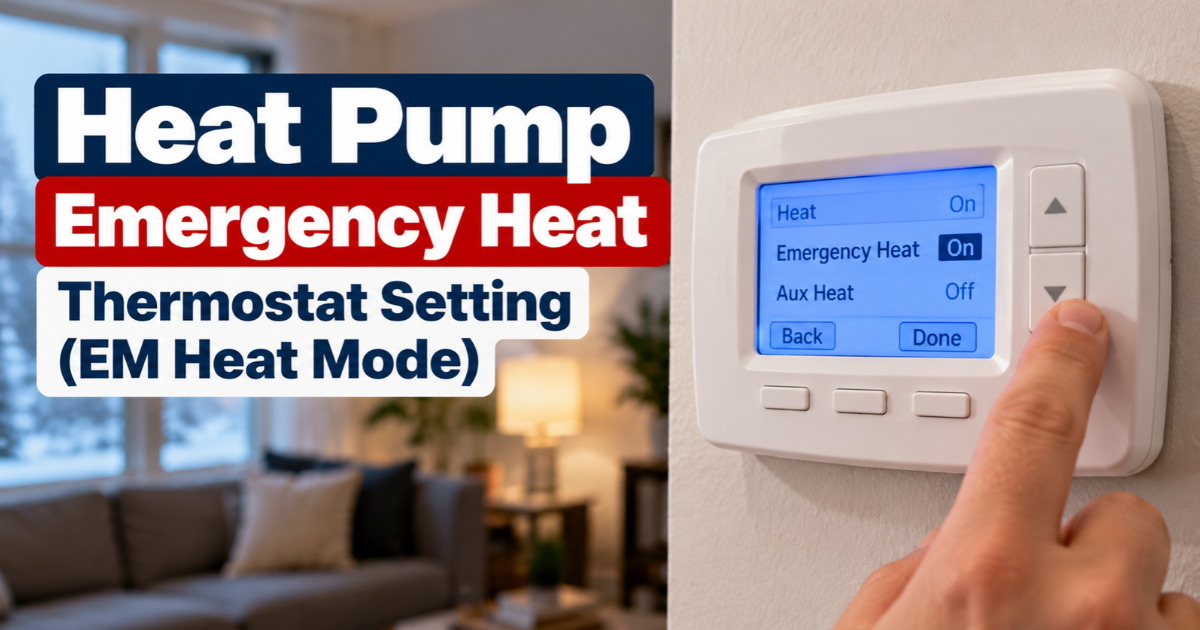
When you select EM Heat, the thermostat stops signaling the outdoor compressor. The blower keeps running, and the heat strips switch on in stages through a sequencer. Most thermostats show a red light or “EM” icon.
The air will feel hotter than normal heat pump air, but you are now heating your home the way a baseboard heater does.
| Setting | What Runs | When It Turns On | Cost to Run |
|---|---|---|---|
| Heat (normal mode) | Heat pump compressor and indoor blower | Whenever the thermostat calls for heat | Lowest: about $0.39 per hour for a typical 3-ton unit |
| Auxiliary heat (AUX) | Heat pump plus heat strips in short bursts | Automatically during defrost, deep cold, or big setpoint jumps | Moderate: depends on how long the strips run |
| Heat pump emergency heat (EM Heat) | Heat strips only, compressor locked out | Only when you select it manually | Highest: about $1.31 to $2.62 per hour |
| Dual fuel backup | Gas, propane, or oil furnace | Below a set outdoor temperature, or manually in EM mode | Depends on fuel price and furnace efficiency |
Supply-only estimates at PPL’s price to compare.
When Should You Use Heat Pump Emergency Heat? 5 Rules for Central PA
These five rules keep EM Heat from quietly inflating your winter bill.
1. Use It Only When the Outdoor Unit Has Failed or Is Iced Over
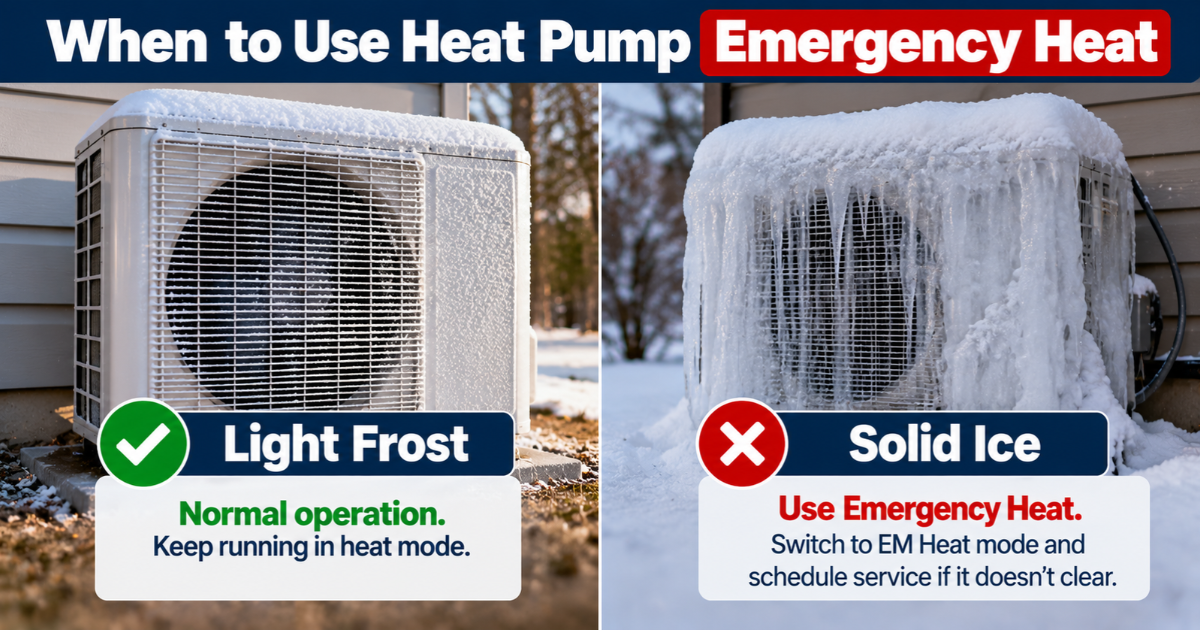
Heat pump emergency heat has one job: keeping your family warm when the outdoor unit cannot run. Switch to it if the outdoor fan is not spinning, the compressor will not start, or the unit is encased in ice that a defrost cycle does not clear.
Light frost is normal, since heat pumps defrost themselves in cold, damp weather. A solid block of ice over the coil and fan, often from freezing rain or a dripping gutter, is not.
2. Don’t Use It Just Because It Is Cold Outside
This is the biggest mistake Central PA homeowners make. A properly sized heat pump runs long cycles on cold days and calls for auxiliary heat on its own.
ENERGY STAR verifies cold climate heat pumps with third-party testing down to 5°F, and those units keep heating below that point. It also advises setting a comfortable temperature and leaving it there, because deep setbacks push the recovery onto backup heat.
With Harrisburg’s average January low around 23°F, turning on heat pump emergency heat on a normal winter night trades your cheapest heat for your most expensive.
3. Switch It On During a Heat Pump Repair Wait
If your heat pump quits overnight or on a weekend, heat pump emergency heat is the right call. Keep the setpoint modest, around 66°F to 68°F, and close blinds at night.
Then call for service. A day or two on backup is fine; weeks of it is where bills spiral.
4. Switch It Off as Soon as the Heat Pump Is Fixed
Heat pump emergency heat does not turn itself off. After a repair, set the thermostat back to Heat and confirm the outdoor unit starts before the technician leaves.
A smart thermostat with heat pump controls lets you check the active mode from your phone.
5. Dual Fuel Homes: Your Furnace Is the Backup, Not Heat Strips
In Central PA homes that pair a heat pump with a gas, propane, or oil furnace, the emergency setting usually runs the furnace instead of heat strips, which costs far less. If the heat pump works, let the thermostat hand off to the furnace automatically. That lower cost is one reason dual fuel comes up so often when homeowners compare a heat pump vs furnace in Central PA.
Not sure which backup your system has? A Tapper Energy technician can check your heat strips, sequencers, and thermostat settings in one visit. Call (717) 921-4822 or schedule service online.
How Much Does Heat Pump Emergency Heat Cost to Run?
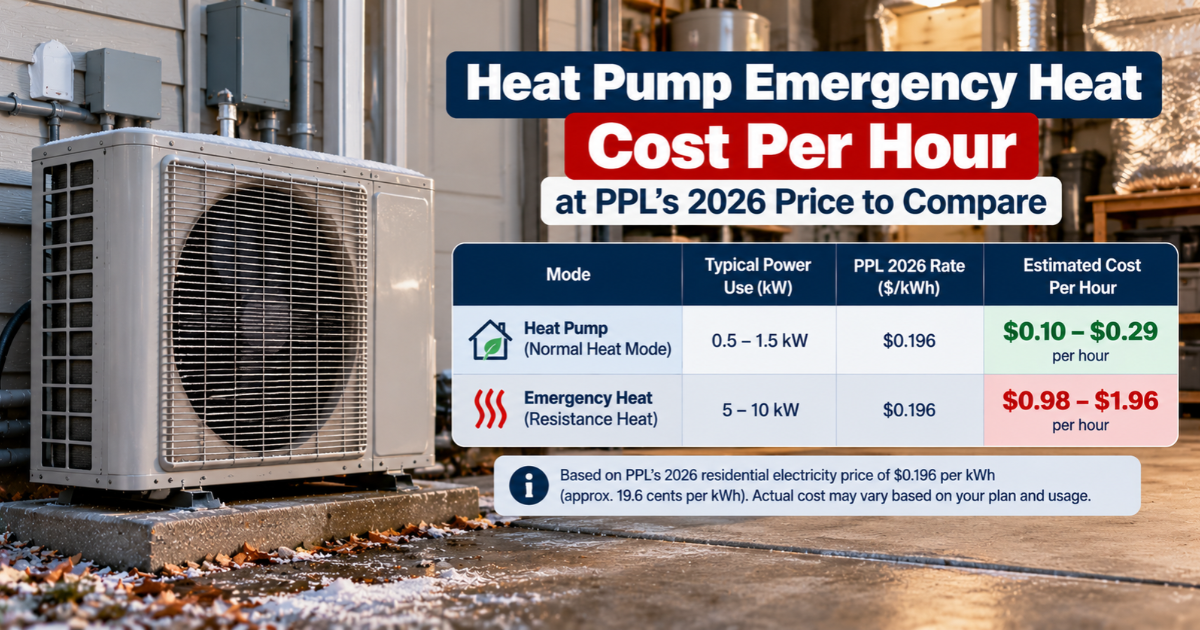
Heat pump emergency heat cost comes down to one equation: heat strip kilowatts multiplied by your electric rate. Heat strips turn 1 kWh of electricity into 1 kWh of heat, while a working heat pump often moves 2 to 3 units of heat per unit of electricity.
The table uses PPL Electric’s residential price to compare of 13.079 cents per kWh, in effect through November 30, 2026 (per the PA PUC’s PAPowerSwitch site). It assumes 12 hours of run time a day, typical of a cold Harrisburg January week.
| Heating Mode | kW Draw | Cost Per Hour (PPL rate) | Cost Per Day (12 hrs) | Cost Per Month (30 days) |
|---|---|---|---|---|
| Heat pump, normal Heat mode (3-ton) | About 3 kW | $0.39 | $4.71 | $141 |
| Heat pump plus 5 kW AUX stage (both running) | About 8 kW | $1.05 | $12.56 | $377 |
| Emergency heat, 10 kW strips | 10 kW | $1.31 | $15.69 | $471 |
| Emergency heat, 15 kW strips | 15 kW | $1.96 | $23.54 | $706 |
| Emergency heat, 20 kW strips | 20 kW | $2.62 | $31.39 | $942 |
These are supply charges only. PPL delivery charges come on top, and the rate resets every June 1 and December 1.
A Simple Cost Example
Take a hypothetical Mechanicsburg home with 15 kW heat strips and a failed outdoor fan motor. The family runs heat pump emergency heat for 4 days while the part ships. At 12 hours a day, that is about $94 in supply charges.
Now say the thermostat stays on EM Heat for the rest of January after the repair. That adds roughly $635 over 27 days, versus about $127 on the repaired heat pump. Forgetting the switch costs more than the repair.
For more ways to trim winter costs, see our guide to lower heating bills in Central PA. If repairs keep piling up on an older system, compare current heat pump installation cost in Pennsylvania.
Why Is Heat Pump Emergency Heat Not Working or Blowing Cold Air?
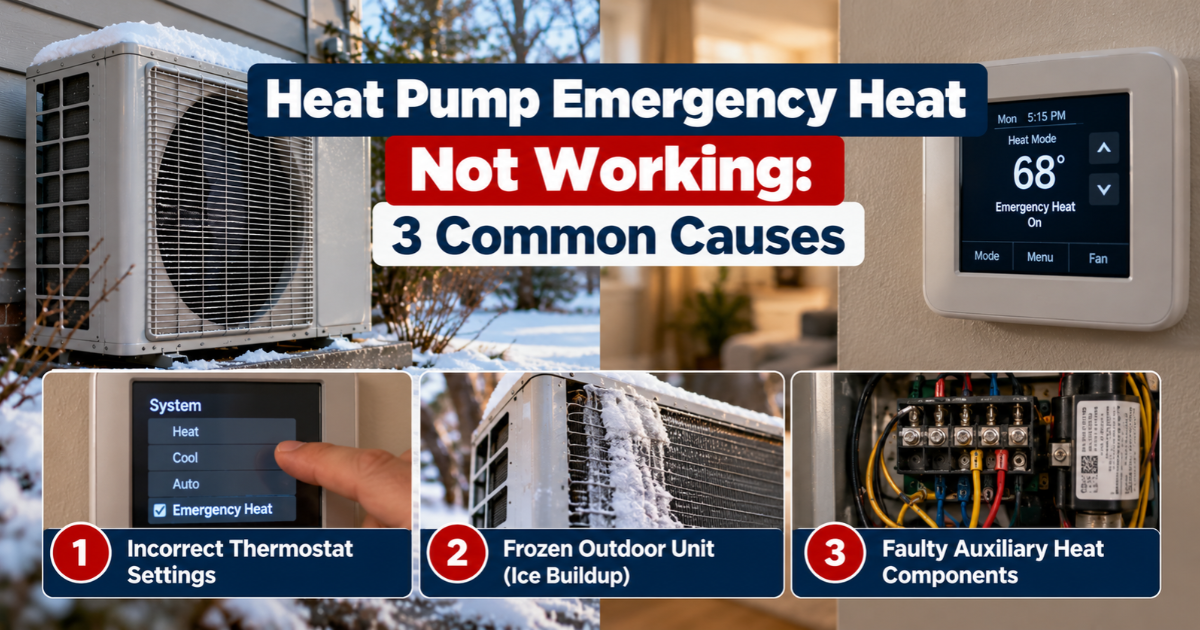
If heat pump emergency heat still blows cool air after 5 minutes, the backup system has its own problem.
Tripped Heat Strip Breaker
Heat strips usually have their own double-pole breakers in the main panel, and sometimes at the air handler. A tripped strip breaker means the blower runs but no heat comes out. Reset it once. If it trips again, call a technician, since that can signal a shorted element.
Failed Sequencer or Relay
Sequencers bring heat strips on one stage at a time so they do not overload the circuit. When one fails, some or all strips never energize, and you get lukewarm air instead of hot air. This involves 240-volt wiring, so it is a job for a trained technician.
Thermostat Wiring Issue
Emergency heat uses its own thermostat terminal, usually marked E or W2. If that wire is loose, broken, or skipped during a thermostat swap, heat pump emergency heat will do nothing. A technician can test the signal at the air handler in minutes.
FAQ: Heat Pump Emergency Heat
At what temperature should I switch to emergency heat?
There is no outdoor temperature at which you should switch to heat pump emergency heat if the heat pump is working. Modern heat pumps keep heating well below freezing and call for auxiliary heat automatically. Use emergency heat only when the outdoor unit has failed, is iced over, or is waiting on a repair, then switch back to Heat once it is fixed.
Is it bad to run heat pump emergency heat all day?
Running it all day will not damage your system, but it is expensive. At PPL’s current price to compare, 15 kW heat strips cost about $1.96 an hour in supply charges alone, roughly five times a typical heat pump in normal mode. It is fine for a day or two during a breakdown, but weeks of use can add hundreds of dollars to a winter bill.
Why is my heat pump stuck on emergency heat?
A heat pump that seems stuck on emergency heat was usually set to EM Heat at the thermostat and never switched back. If the thermostat says Heat but the EM light stays on, the cause may be a failed outdoor unit, a wiring fault, or a control board problem. Switch to Heat first, and if the outdoor unit still will not start, call a technician.
Does heat pump emergency heat use more electricity?
Yes. Heat pump emergency heat uses electric resistance heat strips that turn 1 kWh of electricity into 1 kWh of heat. A working heat pump often moves 2 to 3 units of heat for every unit of electricity it uses. So heat strips can use two to three times more electricity for the same warmth, which shows up fast on a PPL bill.
What temperature can a heat pump handle in Pennsylvania?
Most modern heat pumps keep heating well below freezing. ENERGY STAR certified cold climate models are tested down to 5°F and keep working below that, while standard units lose capacity as temperatures fall and lean more on auxiliary heat. With Harrisburg’s average January low around 23°F, a properly sized heat pump handles most Central PA winter nights on its own.
Can Tapper Energy service my heat pump in winter?
Yes. Tapper Energy repairs heat pumps all winter across Harrisburg, Mechanicsburg, Camp Hill, Enola, and the rest of Central PA, including heat strips, sequencers, defrost problems, and thermostat wiring. Maintenance plan customers also get 24-hour emergency service. If your heat pump is stuck on emergency heat or blowing cold air, call (717) 921-4822 to schedule a visit.
Heat Pump Stuck on Emergency Heat? Call Tapper Energy
Heat pump emergency heat is a lifesaver when your outdoor unit breaks down in January, and a fast way to inflate a PPL bill when left on by mistake. Use it as a short-term backup, then switch back to Heat after the repair.
If your system keeps leaning on backup heat or will not leave EM mode, the family-owned team at Tapper Energy can diagnose it fast across Harrisburg, Mechanicsburg, Camp Hill, Enola, Marysville, Newport, Millersburg, Duncannon, Dauphin, and Halifax.
Call (717) 921-4822 today or request your free estimate on a new heat pump or dual fuel system.
Written by the Tapper Energy HVAC team. Our technicians diagnose and repair furnaces, AC systems, boilers, and heat pumps across Harrisburg, Mechanicsburg, and Central PA.