A dirty furnace flame sensor is one of the most common reasons a gas or propane furnace in Harrisburg PA lights, runs for a few seconds, and then shuts itself off. The furnace flame sensor is a thin metal rod that proves a flame is burning. When soot or oxidation coats it, the control board cannot read the flame, so it closes the gas valve as a safety step.
The good news: a careful cleaning often fixes it in about 15 minutes. If the rod is cracked or worn out, a professional replacement typically costs $75 to $250, based on national cost data from Carrier and Angi.
TL;DR
- Classic sign: the burners light, then shut off within a few seconds (Carrier cites 2 to 5 seconds), and the furnace retries until it locks out.
- Typical cost: the part costs $5 to $25, and a technician’s replacement usually runs $75 to $250 including labor.
- When to call a pro: if the furnace still shuts off after one cleaning, flashes an error code, or shows a yellow or orange burner flame.
Furnace keeps shutting off? Call Tapper Energy at (717) 921-4822 or request service and a free estimate online.
Table of Contents
- What Does a Furnace Flame Sensor Do?
- 5 Signs of a Bad Flame Sensor
- How to Clean a Furnace Flame Sensor
- Furnace Flame Sensor Replacement Cost
- Flame Sensor vs Ignitor vs Thermocouple
- Why Central PA Homes Need a Fall Check
- FAQ
- Book a Tune-Up
What Does a Furnace Flame Sensor Do?
A furnace flame sensor is a safety device. Every time your furnace starts, the igniter lights the gas, and the sensor has a few seconds to confirm that a real flame is present.
It uses a process called flame rectification: the control board sends a tiny current through the rod, and the flame carries it back to the burner. No current means no flame, so the board shuts the gas valve before unburned gas can build up.
That is why a dirty furnace flame sensor looks exactly like “no flame” to the control board, even when the burners are lit.
Where Is the Furnace Flame Sensor Located?
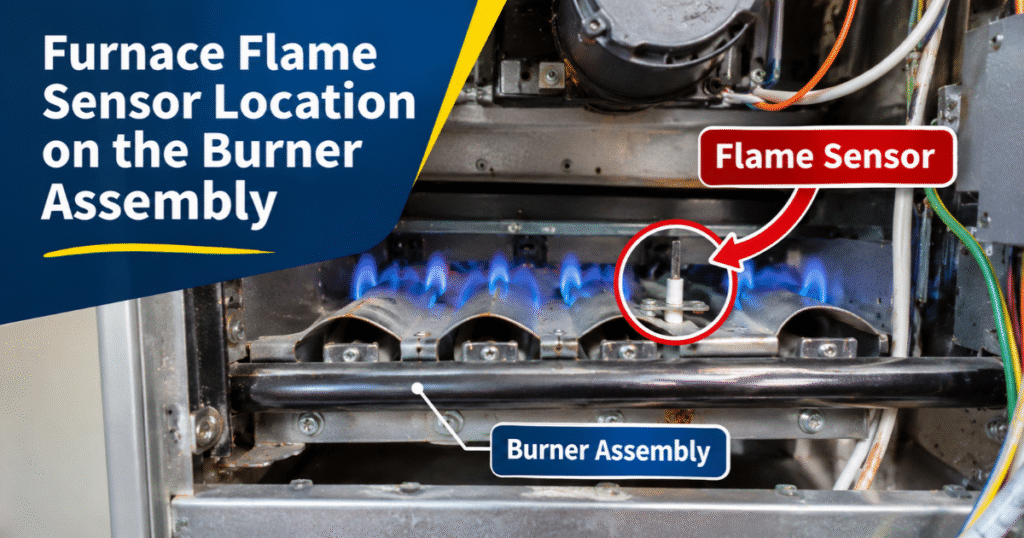
Remove the lower front panel and look at the burner assembly. You will see a thin, bent metal rod held by one screw, with a white porcelain base and a single wire. Its tip sits in the path of one burner flame, often opposite the igniter.
Why Do Flame Sensors Get Dirty?
The rod sits in a flame all winter and slowly collects carbon and oxidation. Basement dust, pet hair, and drywall dust from renovations speed up the buildup. Even a coating you can barely see can weaken the signal enough to cause shutdowns.
What Are the 5 Signs of a Bad Furnace Flame Sensor?
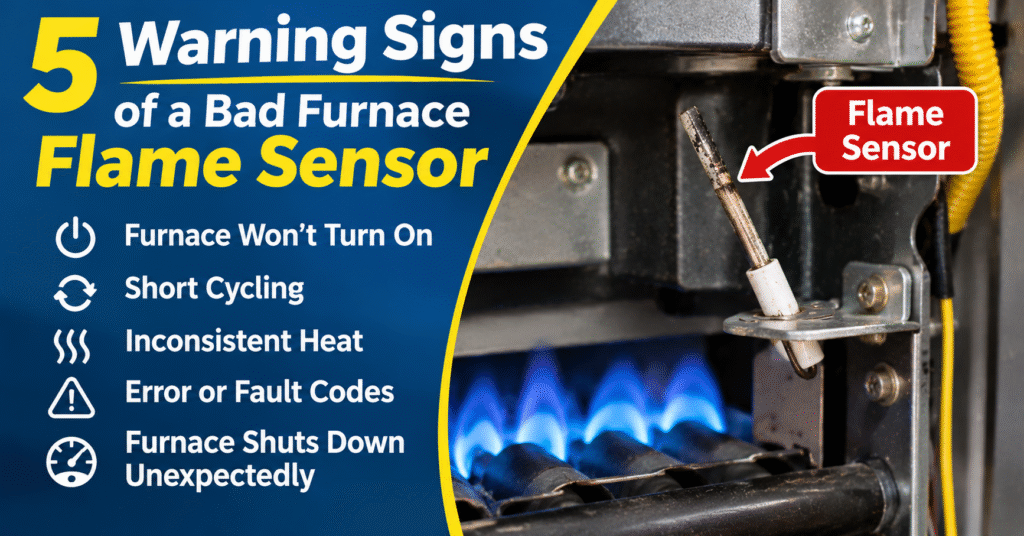
A failing furnace flame sensor causes a very specific pattern. If you see two or more of these signs, the sensor is the first part to check.
1. Burners Light, Then Shut Off in Seconds
This is the textbook symptom. You hear the inducer motor, the igniter glows or clicks, the burners light, and a few seconds later the flame goes out. Carrier’s homeowner guide puts this shutoff at 2 to 5 seconds after startup.
2. Furnace Short Cycling
The furnace keeps restarting but never runs long enough to warm the house. Short cycling has several causes, including a clogged filter and an oversized system, which we cover in our guide to furnace short cycling in Harrisburg PA.
3. Furnace Lockout After Several Tries
Most control boards allow only a few ignition attempts, then lock the furnace out for a set time or until the power is reset. A house that goes cold overnight is often a lockout.
4. Blinking Error Code on the Control Board
Look through the small window on the lower panel. Many furnaces flash a code for “flame sense failure” or “ignition lockout.” The code chart is usually printed on the inside of the furnace door.
5. Soot, Corrosion, or a Cracked Porcelain Base
A healthy rod looks clean and metallic. A black, white, or chalky coating means it needs cleaning. Deep pitting, a bent rod, or a cracked porcelain base means it needs replacing.
Not sure what you are seeing? When a Tapper technician answers a no-heat call, the flame sensor is one of the first parts we test, because it takes minutes to check. Call (717) 921-4822 and we can walk you through it.
How Do You Clean a Furnace Flame Sensor Safely?
Cleaning a furnace flame sensor is one of the few furnace jobs a handy homeowner can do. Carrier recommends a trained technician if you are not comfortable around gas equipment, and that is good advice.
Safety First: Turn Off Power and Gas
- Set the thermostat to OFF.
- Turn off the furnace power switch (it looks like a light switch near the unit) or the breaker.
- Turn the gas valve on the supply line to OFF.
- If you smell gas at any point, stop, leave the house, and call your gas utility from outside.
Step-by-Step Cleaning
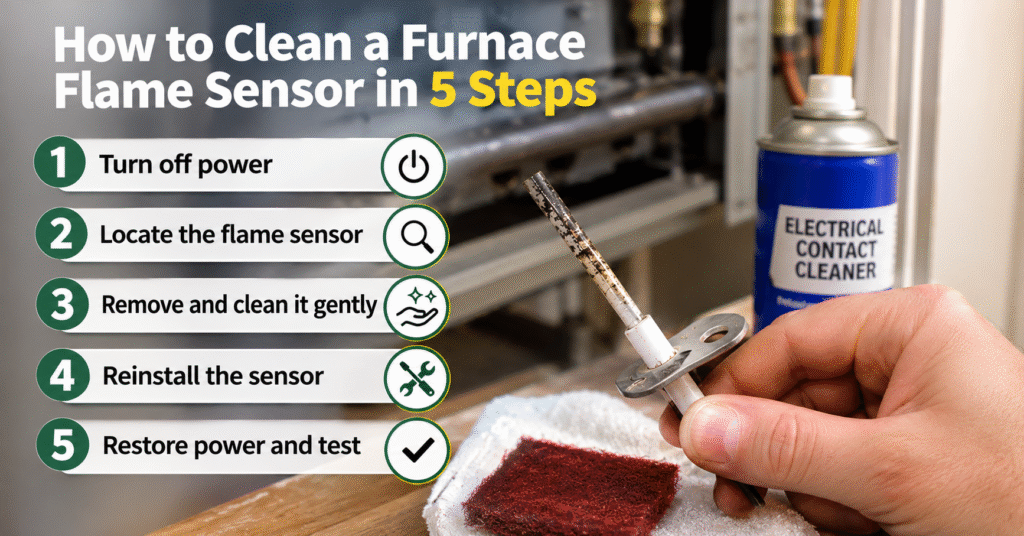
- Remove the lower furnace panel and find the sensor rod near the burners.
- Remove the single mounting screw (usually 1/4 inch) and gently slide the furnace flame sensor out. Do not tug on the wire.
- Lightly rub only the metal rod with fine steel wool, a fine abrasive pad, or very fine sandpaper until it looks clean and shiny.
- Wipe off the dust with a clean, dry paper towel. Never touch the porcelain with sandpaper.
- Reinstall the sensor, reconnect the wire firmly, replace the panel, and restore gas and power.
- Run a full heating cycle and watch whether the burners stay lit.
| Step | Tool | Time | Mistake to Avoid |
|---|---|---|---|
| Shut off power and gas | None | 2 minutes | Working on a live furnace |
| Remove the sensor | 1/4 inch nut driver | 3 minutes | Pulling on the wire |
| Clean the rod | Fine steel wool or abrasive pad | 3 to 5 minutes | Coarse sandpaper that scratches the rod |
| Wipe and reinstall | Dry paper towel | 3 minutes | A loose wire connection |
| Test a full cycle | Thermostat | 5 to 10 minutes | Skipping the test run |
When Will Cleaning Not Fix It?
If the furnace still shuts off after a careful cleaning, the cause may be a worn furnace flame sensor, a loose or corroded wire, a poor ground, a weak flame, or a failing control board. A technician uses a microamp meter to tell these apart. Rule of thumb: if you clean the same sensor more than twice in one season, replace it.
How Much Does Furnace Flame Sensor Replacement Cost in Harrisburg PA?
Furnace flame sensor replacement is one of the cheapest furnace repairs. The part is inexpensive, and most of the bill is the technician’s service call and time. The ranges below are typical national ranges from Carrier’s flame sensor guide, Angi, and HomeGuide. They are not a Tapper Energy quote.
| Service | DIY Cost | Typical Pro Cost | Time |
|---|---|---|---|
| Clean the flame sensor | $0 to $10 | Included in a $80 to $170 tune-up | 15 to 30 minutes |
| Replace the flame sensor | $5 to $25 (part only) | $75 to $250 | 30 to 60 minutes |
| Diagnostic service call | Not applicable | $75 to $200 | About 1 hour |
| After-hours emergency visit | Not applicable | $140 to $250 per hour | Varies |
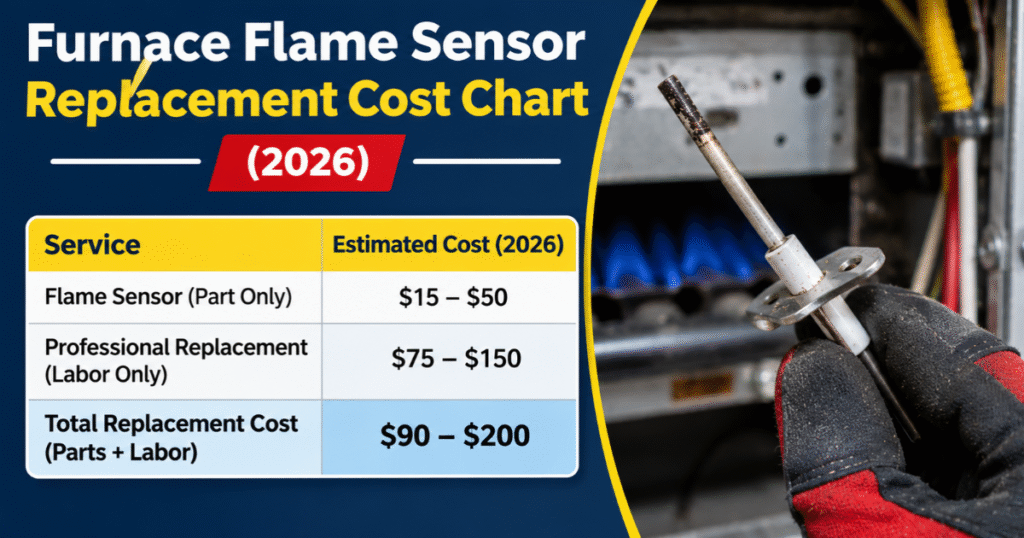
Price depends mostly on a scheduled visit versus an emergency call, whether your furnace needs a brand-specific part, and whether the technician finds a second problem such as a corroded wire. For other parts, see our furnace repair cost guide for Harrisburg PA.
Flame Sensor vs Ignitor vs Thermocouple: What Is the Difference?
These three parts sit close together and are easy to mix up.
| Part | Furnace Type | Job | Failure Symptom | Typical Pro Cost |
|---|---|---|---|---|
| Flame sensor | Modern gas and propane furnaces with electronic ignition | Proves the burner flame is lit | Burners light, then shut off in seconds | $75 to $250 |
| Hot surface ignitor | Modern gas and propane furnaces | Glows red hot to light the gas | No glow, burners never light | $100 to $250 |
| Thermocouple | Older furnaces with a standing pilot light | Proves the pilot flame is lit | Pilot light will not stay lit | $100 to $250 |
Costs are national averages from HomeGuide, HomeAdvisor, and Carrier. Quick test: a pilot flame that burns all the time means a thermocouple. A furnace that lights itself with a glowing element or spark uses a furnace flame sensor.
Why Should Central PA Homes Check the Flame Sensor Every Fall?
Pennsylvania leans heavily on combustion heat. According to the U.S. Energy Information Administration, 50.7% of Pennsylvania households used natural gas as their main heating fuel in 2023, well above the 46% national average. Propane furnaces, common in rural homes without a gas line, use the same kind of sensor, so a large share of Central PA furnaces depend on a furnace flame sensor every single cycle.
Our long, cold heating season means a furnace fires up many times a day for months. A sensor that was borderline in October can fail on the coldest night in January, which is exactly when a no-heat call is hardest to schedule.
That is why ENERGY STAR’s maintenance checklist recommends checking the heating system every fall, including burner combustion and gas connections. A furnace tune-up in Harrisburg PA from Tapper Energy includes cleaning the flame sensor, so it is handled before the first cold snap.
Furnace Flame Sensor FAQ
How do I know if my furnace flame sensor is bad?
The clearest sign is a furnace that lights, runs for a few seconds, then shuts off and tries again. Other signs include short cycling, a lockout after several failed starts, a blinking error code, and a black, white, or pitted sensor rod. If one careful cleaning does not stop the shutdowns, the sensor, its wire, or the ground connection needs a technician’s test.
How often should a flame sensor be cleaned?
Most homes should have the flame sensor inspected and cleaned once a year during a fall furnace tune-up. ENERGY STAR recommends a heating system check-up every fall, and the flame sensor is part of the burner inspection. Homes with dusty basements, pets, recent renovation dust, or heavy winter use may need a second cleaning if shutdowns return mid-season.
How long does a furnace flame sensor last?
Carrier notes there is no universal service life for a furnace flame sensor. Many last for years with a yearly cleaning, but heat stress, heavy oxidation, and repeated sanding slowly wear the rod down. If a sensor needs cleaning more than twice in one heating season, or the rod looks pitted or the porcelain is cracked, replacing it is usually the smarter fix.
Can a bad flame sensor be dangerous?
A bad flame sensor is usually a nuisance rather than a hazard, because it fails safe by shutting off the gas when it cannot prove a flame. The real risk is a cold house and frozen pipes during a Central PA cold snap. Never bypass or disconnect the sensor, and if you smell gas, leave the home and call your gas utility from outside.
How much does it cost to replace a furnace flame sensor?
The part itself costs about $5 to $25. With a technician’s labor and service call, most homeowners pay $75 to $250, based on national cost data from Carrier and Angi. Emergency or after-hours visits can cost more. Having the sensor checked during a scheduled fall tune-up is usually the least expensive way to handle it before it fails.
Does a furnace tune-up include flame sensor cleaning?
Yes. A proper gas furnace tune-up includes inspecting and cleaning the flame sensor, checking the igniter, testing safety switches, and checking burner combustion. Tapper Energy’s furnace tune-ups in Harrisburg and Central PA include flame sensor cleaning, and maintenance plan customers also get 24-hour emergency service when something fails in the middle of winter.
Furnace Keeps Shutting Off? Book a Tapper Energy Tune-Up
A furnace flame sensor problem is small, but a cold house is not. If your furnace lights and quits, or you want the sensor cleaned before the next cold snap, our family-owned, local team serves Harrisburg, Mechanicsburg, Camp Hill, Enola, and the rest of Central PA.
Call (717) 921-4822 or request service and a free estimate online. Maintenance plan customers get 24-hour emergency service.
About the Author
Written by the Tapper Energy HVAC team. Our technicians diagnose and repair furnaces, AC systems, boilers, and heat pumps across Harrisburg, Mechanicsburg, and Central PA.