Indoor Air Quality Harrisburg PA: 10 Proven Ways to Breathe Cleaner Air at Home (2026)
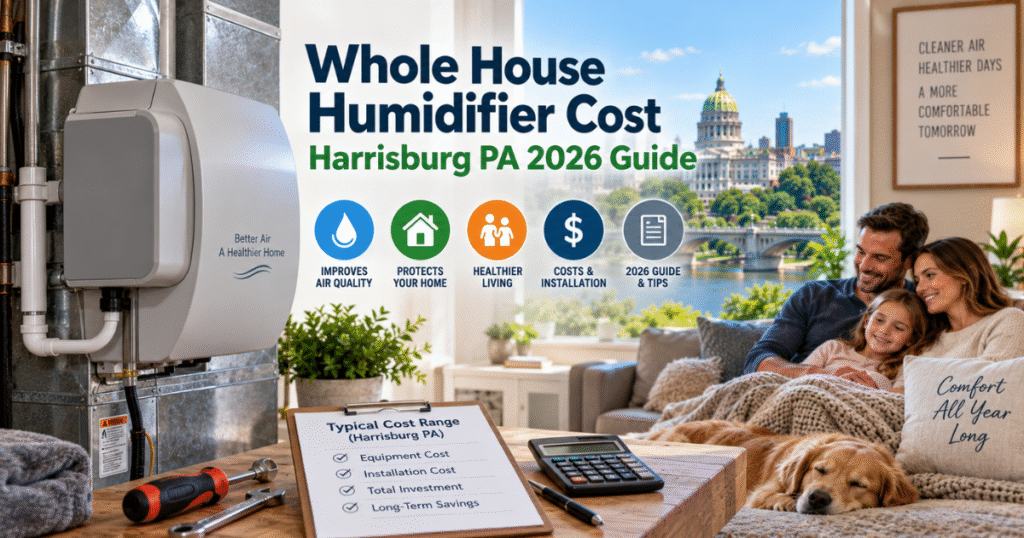
Indoor air quality Harrisburg PA homeowners breathe every day is often worse than the air outside. The EPA reports that some pollutants are often 2 to 5 times more concentrated indoors than outdoors, and most of us spend about 90% of our time inside. In sealed, well-insulated Central PA homes, that trapped air can trigger allergies, asthma flare-ups, headaches, and fatigue with no obvious cause. The fix is rarely complicated. Most indoor air quality Harrisburg PA problems trace back to four sources: dirty filters, leaky ducts, humidity swings, and radon. Below are 10 proven fixes, what each one typically costs, and which ones you can handle yourself this weekend. TL;DR Want a clear answer on your home’s air? Call Tapper Energy at (717) 921-4822 or request a free estimate for an indoor air quality check. Table of Contents How to Improve Indoor Air Quality Harrisburg PA Homes: 10 Proven Ways In our service calls across Harrisburg, Mechanicsburg, and Camp Hill, the first three culprits we find are almost always a clogged filter, dusty return ducts, and winter air that is far too dry. 1. Replace HVAC Air Filters Every 1 to 3 Months Your air filter is the first line of defense for everything your system breathes. A clogged filter stops trapping dust, chokes airflow, and makes your furnace or AC work harder. Set a phone reminder. It is the easiest way to protect the indoor air quality Harrisburg PA households depend on through a long heating season. 2. Install a Whole House Air Purifier A whole house air purifier mounts in your ductwork and cleans the air for every room, not just one bedroom. Options include extended media cabinets, electronic air cleaners, and HEPA bypass systems. Typical installed cost runs about $500 to $3,500 depending on the technology. HEPA bypass units sit at the top of that range because they need a separate duct loop to keep airflow healthy. For allergy and asthma sufferers, this is one of the most effective upgrades for indoor air quality Harrisburg PA homes can get. 3. Add a Whole House Humidifier for Winter Central PA winters push indoor humidity well below 30%. Dry air irritates sinuses, cracks skin, and helps some viruses survive longer. A bypass or steam humidifier on your furnace holds the whole house at 35% to 45%, the range where indoor air quality Harrisburg PA families notice the biggest winter difference. See our full breakdown of whole house humidifier cost in Harrisburg PA for installed prices of $400 to $1,200. 4. Schedule Professional Duct Cleaning Every 3 to 5 Years Ducts collect dust, pet hair, and construction debris over time. Most industry guidance points to cleaning every 3 to 5 years, or sooner after a renovation, a rodent problem, or visible mold. Annual cleaning is rarely necessary. Expect about $300 to $700 for a legitimate whole-home cleaning. Anything advertised at $99 is usually a bait-and-switch, as our duct cleaning cost Harrisburg PA guide explains. 5. Install UV Germicidal Lights in Your HVAC System UV-C lamps mounted near the indoor coil kill mold, bacteria, and viruses that grow on damp surfaces inside your system. They do not catch dust, so pair them with a good filter. Installed prices usually land between $600 and $1,500 for a coil-mounted lamp. Bulbs need replacing every 1 to 2 years. 6. Use MERV 11 to 13 Filters (Not Basic Fiberglass) Cheap fiberglass filters (MERV 1 to 4) protect the blower but let most allergens pass straight through. MERV 11 to 13 filters capture pollen, pet dander, mold spores, and a large share of fine particles. Check with a technician before upgrading. Many indoor air quality Harrisburg PA visits we make start with a filter too dense for an older furnace’s small return. A 4-inch media cabinet solves that for most homes. 7. Seal Ductwork Gaps and Leaks Leaky return ducts in basements, attics, and crawl spaces pull in dust, insulation fibers, and damp air, then blow it into every room. ENERGY STAR estimates that 20% to 30% of the air moving through a typical duct system is lost to leaks, holes, and poor connections. Professional sealing with mastic or aerosol sealant usually costs a few hundred dollars to about $2,000, depending on access. If your ducts are crushed, rusted, or disconnected, compare that against full air duct replacement cost in PA. 8. Ventilate with an ERV or HRV System Modern, tightly built homes hold heat well but trap stale air. An energy recovery ventilator (ERV) or heat recovery ventilator (HRV) swaps stale indoor air for fresh outdoor air while recovering most of the heating or cooling energy. For Harrisburg’s humid summers and cold winters, an ERV is usually the better fit because it also manages moisture. Installed costs typically range from $1,500 to $4,500. Contractors size these systems to ASHRAE Standard 62.2, the national benchmark for residential ventilation and indoor air quality Harrisburg PA builders follow. 9. Control Humidity Below 50% in Summer Summers in the Susquehanna Valley bring long stretches of muggy, high dew point weather. Above 50% indoor humidity, dust mites multiply and mold grows on basement walls and inside ducts, two of the most common indoor air quality Harrisburg PA allergy triggers. A properly sized AC removes moisture as it cools. If your basement still feels damp, a whole house dehumidifier tied into your ductwork keeps levels in check. 10. Test for Radon (Pennsylvania Is a High-Risk State) Radon is an odorless, radioactive gas that seeps up from the soil through basement cracks. According to the Pennsylvania Department of Environmental Protection, about 40% of homes tested in the state have radon above the EPA action level of 4 pCi/L. Radon is the second leading cause of lung cancer in the U.S. Test kits cost about $20 to $30 at hardware stores, and DEP recommends testing in colder months when windows stay closed. If levels are high, a certified mitigation system typically costs $800 to $1,200. No list of indoor air quality