Author name: admin

Furnace noise Harrisburg PA guide covering 9 alarming furnace sounds and what they mean
Uncategorized

Furnace Noise Harrisburg PA: 9 Alarming Sounds Explained (2026)

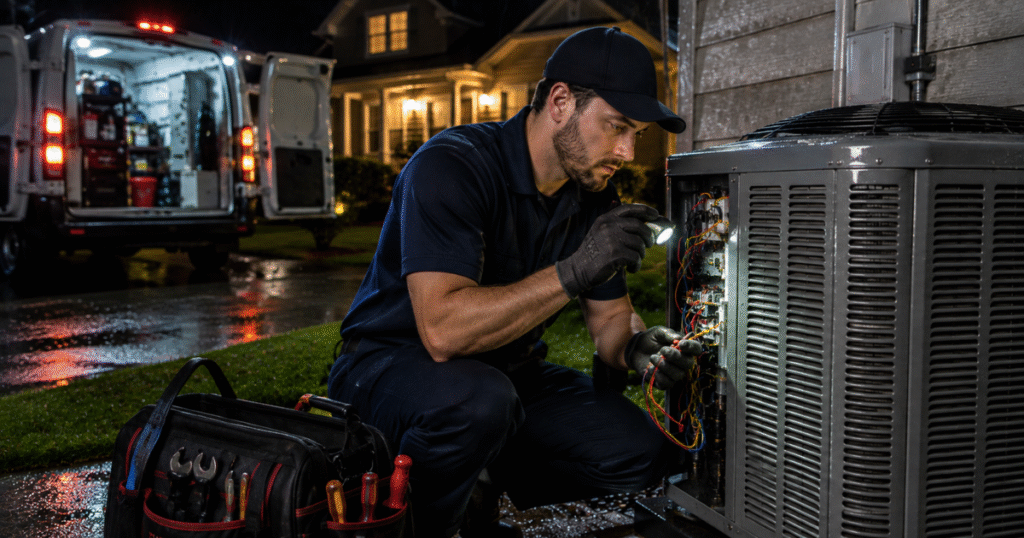
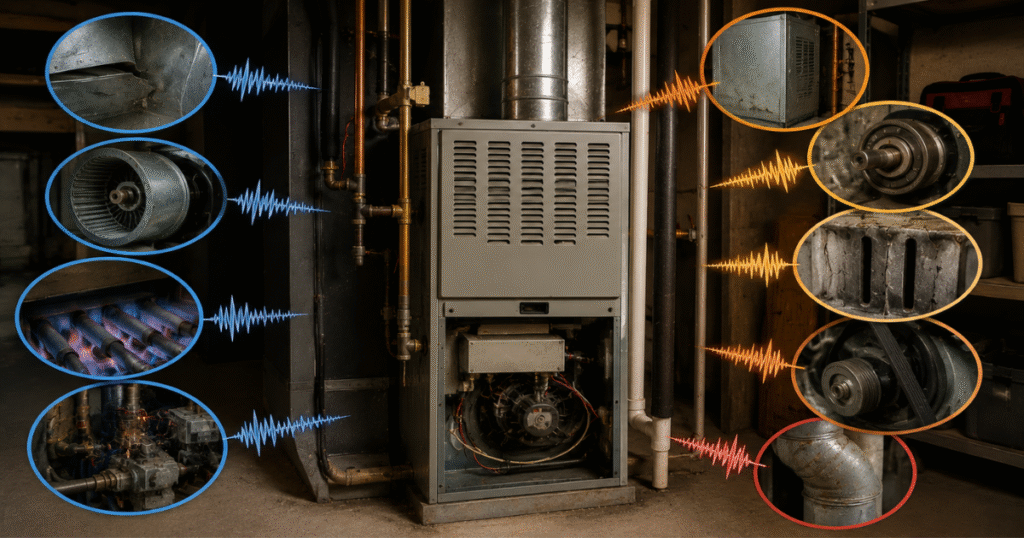
Furnace noise Harrisburg PA homeowners hear almost always points to one specific, identifiable problem, and a few of these sounds are safety emergencies that need attention right away. Banging usually means delayed ignition. Screeching points to a belt or bearing. Grinding means a failing blower motor. Rumbling can signal a dirty burner or a carbon monoxide risk. Central PA winters push a furnace to run for hours at a stretch from November through March, and that workload is exactly when a new sound tends to show up. This furnace noise Harrisburg PA guide breaks down all nine common sounds, what causes each one, whether it is a DIY check or a professional repair, and what it typically costs to fix. TL;DR Not sure what your furnace noise means or how urgent it is? Call Tapper Energy at (717) 921-4822. We offer free estimates and same-day furnace noise Harrisburg PA diagnostics across Central PA. Table of Contents 9 Furnace Noises and What They Mean Every furnace noise Harrisburg PA homeowners report has a mechanical explanation. Here is what each of the nine most common sounds means, what it takes to fix, and how urgent it is. 1. Banging or Booming (Delayed Ignition) A bang or boom right when the furnace kicks on is almost always delayed ignition: gas builds up in the burner chamber for a few extra seconds, then ignites all at once instead of smoothly. The usual cause is a dirty burner or a slow-to-spark ignitor. This is not a DIY fix. Delayed ignition can crack a heat exchanger over time, so it needs a professional inspection. Call today rather than waiting. Expect to pay $150 to $300 for burner cleaning and ignitor service. If banging shows up alongside frequent on-and-off cycling, see our guide on furnace short cycling in Harrisburg PA. 2. Screeching or Squealing (Belt or Bearing Failure) A high-pitched screech, especially when the blower first kicks on, usually means a fan belt is slipping or worn, or a motor bearing is losing lubrication. Older belt-drive blowers are the most common source of this furnace noise. You can safely check whether the filter is clogged first, since restricted airflow forces the blower to work harder and can worsen the sound, but the belt or bearing itself is a professional repair. Treat it as a call-today issue. A slipping belt left alone eventually snaps and the blower stops moving air entirely. 3. Rattling (Loose Panels, Screws, or Ductwork) Rattling is usually the least urgent sound on this list. Furnace cabinets are held together by a handful of screws, and normal vibration over months of run time works them loose. Loose duct connections rattle the same way. This is genuinely DIY-friendly: turn off the furnace, check that all panels are seated and tight, and inspect any visible duct joints nearby. If tightening the panels does not solve it, the rattle likely comes from inside the cabinet, and it is worth a technician visit to rule out a loose motor mount. 4. Humming or Buzzing (Electrical Issue or Transformer) A steady hum or buzz points to an electrical component: a failing transformer, a worn contactor, or a capacitor starting to go. A faint hum from the transformer at idle can be normal, but a loud or new buzz that grows louder over a few days is not. Electrical components are not a DIY repair given the shock risk and the cost of guessing wrong. Schedule a diagnostic within the week, or call today if the buzzing is loud and constant. 5. Clicking (Ignitor or Flame Sensor Problem) Repeated clicking when the furnace tries to start, especially several clicks without the burner lighting, usually means the ignitor is failing or the flame sensor is dirty and cannot confirm a flame, so the control board keeps retrying. A single click at startup and shutdown is normal. Repeated or rapid clicking is not. A confident DIYer can sometimes clean a flame sensor with fine sandpaper, but ignitor replacement is a professional job. Typical cost runs $80 to $300 depending on the part. 6. Grinding (Blower Motor Bearing Failure) Grinding is a metal-on-metal sound, and it means the blower motor’s bearings are failing. This is one of the more urgent types of furnace noise Harrisburg PA technicians see, because a seized blower can shut the whole system down without warning on a cold night. There is no DIY fix for a bad bearing. Call today. Bearing repair typically runs $150 to $450, and a full motor replacement runs higher depending on the model. 7. Whistling (Dirty Filter or Ductwork Gap) A whistle or high-pitched hiss almost always means air is forcing through a gap that is too small, either a severely clogged filter restricting airflow or a loose duct connection pulling air from the wrong place. This is the easiest DIY check on the list: replace the filter first. If the whistle continues with a fresh filter, the noise is coming from ductwork and is worth a technician visit to locate and seal. 8. Popping (Ductwork Expansion and Contraction) Metal ductwork expands as heated air moves through it and contracts as it cools, and thin sheet metal can pop or oil-can as it flexes, similar to a metal roof warming in the sun. This is common and usually not a safety concern. If the popping is loud, frequent, or coming from one section of ductwork, a technician can reinforce an undersized or poorly supported run to quiet it down. 9. Rumbling (Dirty Burner or Draft Issue) A low rumble that continues through the whole burner cycle, rather than just at startup, can mean the burners are dirty and burning unevenly, or there is a draft or venting problem affecting combustion. This is the furnace noise Harrisburg PA homeowners should treat with the most caution, because incomplete combustion is linked to elevated carbon monoxide production. Do not wait on rumbling. If it comes with a burning smell, soot near the furnace, or a yellow
Boiler replacement cost Harrisburg PA pricing guide showing 9 critical 2026 prices for Central PA homeowners
Uncategorized

Boiler Replacement Cost Harrisburg PA: 9 Critical Prices Every Homeowner Must Know (2026)

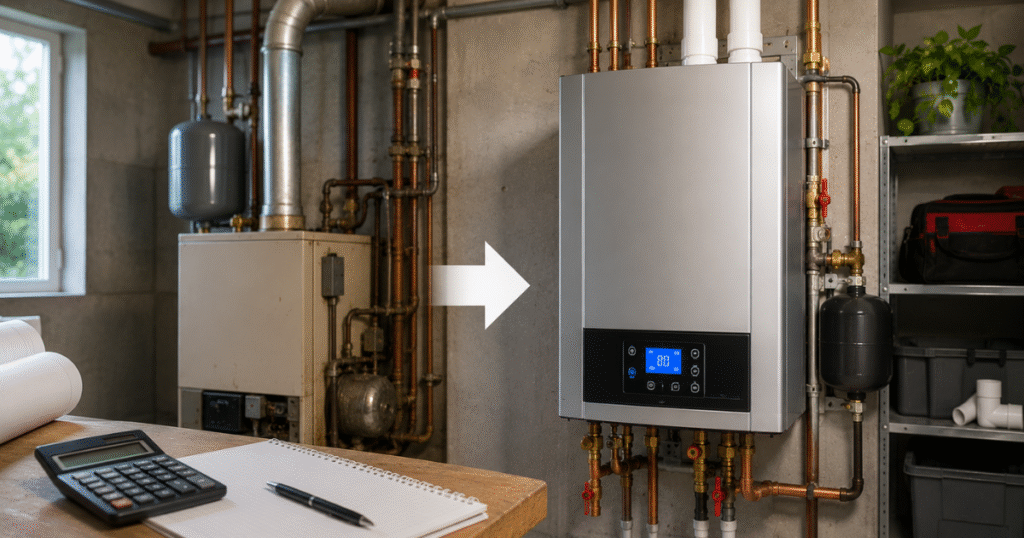
Boiler replacement cost Harrisburg PA ranges from $3,500 to $12,000 depending on the boiler type, size, and fuel source. For Central PA homeowners staring down an aging or failing boiler, knowing these 2026 prices before calling a contractor can save you thousands. The right boiler can cut your heating bills by 30% or more, while the wrong choice locks you into 15 to 20 years of higher energy costs. Harrisburg winters regularly drop below freezing from November through March, and a failing boiler puts your home, your pipes, and your family’s comfort at serious risk. Whether you are replacing a standard gas boiler, switching from oil to a high-efficiency system, or upgrading an old steam boiler in a pre-war row home, this pricing guide breaks down all 9 critical price points so you can budget accurately and make a confident decision. Quick Summary: Ready for an exact quote? Call Tapper Energy at (717) 921-4822 or request a free boiler replacement estimate to get pricing specific to your home. Table of Contents How Much Does Boiler Replacement Cost in Harrisburg PA? (2026 Pricing) Your total boiler replacement cost Harrisburg PA depends on three main factors: the boiler type, your home’s fuel source, and the complexity of the installation. Below are all 9 pricing categories Central PA homeowners need to know, based on 2026 market data and typical Harrisburg-area installation costs. Standard Gas Boiler ($3,500 to $6,000) The most common replacement in Harrisburg homes connected to UGI Gas. A standard gas boiler with 80 to 84% AFUE rating costs $3,500 to $6,000 installed. These units work well for smaller homes under 2,000 square feet with hot water baseboard or radiator systems. Installation typically takes one day for a straightforward swap where the fuel type and venting stay the same. When budgeting boiler replacement cost Harrisburg PA homeowners should know that standard gas boilers are reliable and affordable, but they leave 16 to 20 cents of every heating dollar unrecovered as waste heat. For homeowners on a tighter budget who plan to sell within 5 years, a standard unit still makes financial sense. High-Efficiency Gas Boiler ($5,000 to $8,000) For a higher-tier boiler replacement cost Harrisburg PA homeowners can expect to pay $5,000 to $8,000 for condensing gas boilers with 90 to 97% AFUE ratings. The higher upfront cost pays back through significantly lower fuel consumption. A 95% AFUE boiler extracts nearly all usable heat from natural gas, compared to just 80% from a standard model. For a typical 2,000-square-foot Harrisburg home, the annual fuel savings range from $200 to $400. According to the U.S. Department of Energy, a 0.97 AFUE boiler saves approximately $1,824 in lifetime energy costs compared to a 0.84 AFUE model. If you plan to stay in your home for 10 or more years, a high-efficiency model is the stronger investment. Oil Boiler Replacement ($4,000 to $7,500) Oil boilers remain common in rural parts of Central PA, especially in areas like Halifax, Millersburg, and Duncannon where natural gas lines are unavailable. Replacing an oil boiler costs $4,000 to $7,500 installed. Modern oil boilers reach up to 87% AFUE, which meets the ENERGY STAR threshold for oil-fired boilers. Oil fuel costs tend to be higher and more volatile than natural gas. If gas service is available on your street through UGI, this is a smart time to consider a fuel switch. The gas line installation typically adds $1,000 to $3,000, but most homeowners recoup that within 3 to 5 years through lower fuel bills. Electric Boiler ($2,500 to $5,000) Electric boilers cost $2,500 to $5,000 installed and offer near 99% efficiency, since there is no combustion heat loss. They produce zero emissions at the point of use, require no flue or chimney, and need very little maintenance. However, electricity rates in PPL’s Central PA service area mean annual operating costs run higher than gas or even oil. Electric boilers work best as supplemental heat for home additions, small apartments, or spaces where running gas lines or installing combustion venting is impractical. An electrical panel upgrade ($1,400 to $2,800) may also be required for larger electric boiler units. Combi Boiler ($3,500 to $7,000) A combi boiler replacement cost Harrisburg PA homeowners between $3,500 and $7,000 installed. These combination units handle both space heating and domestic hot water in a single unit, eliminating the need for a separate water heater. Combi boilers save space and simplify your mechanical room, making them ideal for smaller homes. The tradeoff: combi boilers work best in homes with 2 or fewer bathrooms. High hot water demand from multiple showers or fixtures running simultaneously can exceed a combi unit’s flow rate. For larger families, a traditional boiler paired with a separate water heater is the better setup. Steam Boiler Replacement ($5,000 to $10,000) Steam boilers are found in many older Harrisburg homes, especially row homes and pre-1950 construction throughout Midtown and Uptown. Replacing a steam boiler costs $5,000 to $10,000 due to the specialized piping, controls, and safety devices required. If your home has large cast iron radiators with air vents and a single pipe running to each unit, you likely have a steam system. Steam boiler replacements are more complex than hot water systems and often require a two-day installation. In our service calls across Harrisburg, steam boiler replacements are among the most involved jobs we handle, but the result is reliable, even heat throughout these older homes. Cast Iron vs Steel Boiler ($4,000 to $12,000) Cast iron boilers are heavier, more durable, and can last 25 to 30+ years with proper maintenance. They cost $6,000 to $12,000 installed. Steel boilers are lighter, heat up faster, and cost $4,000 to $8,000, but their lifespan averages 15 to 20 years. For Harrisburg homeowners planning to stay in their home long-term, cast iron offers the better lifetime value despite the higher upfront price. If you plan to move within 10 years, a steel boiler delivers solid performance at a lower cost. Labor and Installation Charges ($1,500 to

AC compressor cost Harrisburg PA
Uncategorized

AC Compressor Cost Harrisburg PA: 7 Shocking Prices Every Homeowner Must Know (2026)

AC compressor cost Harrisburg PA ranges from $1,100 to $4,650 fully installed in 2026, depending on the compressor type, system size, and whether your unit is still under warranty. The compressor is the most expensive single component in your air conditioning system, and replacing it can cost nearly as much as a brand-new condenser unit. For Harrisburg and Central PA homeowners facing this repair, understanding the real price breakdown before you call for service is the difference between a smart investment and an expensive mistake. TL;DR Need a straight answer on your AC compressor cost? Call Tapper Energy at (717) 921-4822 or request a free estimate for upfront, no-surprise pricing. Table of Contents How Much Does AC Compressor Replacement cost Harrisburg PA? What drives the total AC compressor cost Harrisburg PA? It comes down to four main factors: the compressor type, your system size in tons, whether the manufacturer warranty still covers parts, and the refrigerant your system uses. Here is what each piece of the bill looks like in 2026. Single-Stage Compressor ($500 to $1,500 for the Part) Single-stage compressors are the most common type in Central PA homes built before 2015. They run at full capacity whenever they cycle on, which makes them less efficient but also the most affordable to replace. For this compressor type, the AC compressor cost Harrisburg PA runs $1,100 to $2,700 fully installed, with the part itself at $500 to $1,500 depending on tonnage. Two-Stage Compressor ($700 to $2,100 for the Part) Two-stage compressors run at a lower speed most of the time and ramp up to full power only on the hottest days. They cost more upfront but deliver better humidity control during Central PA’s humid summers. The two-stage AC compressor cost Harrisburg PA runs $1,500 to $3,400 installed, with the part at $700 to $2,100. Variable-Speed / Inverter Compressor ($1,100 to $3,000+ for the Part) Variable-speed (inverter-driven) compressors adjust output continuously, delivering the quietest operation and lowest electric bills. They carry the highest AC compressor cost Harrisburg PA homeowners will encounter. Parts range from $1,100 to $3,000 or more, and total installed cost can reach $2,200 to $4,650. In our service calls across Harrisburg and Mechanicsburg, we find these are most common in systems installed after 2018. Labor and Installation Charges ($500 to $1,200) Labor is a major factor in the total AC compressor cost Harrisburg PA homeowners pay. Compressor replacement takes 4 to 8 hours of on-site labor for a certified HVAC technician. Labor rates in the Harrisburg PA market run $85 to $150 per hour, putting the labor portion at $500 to $1,200. The job includes recovering the existing refrigerant (required by EPA regulations), removing the old compressor, brazing the new one into the refrigerant lines, pulling a vacuum on the system, and recharging with fresh refrigerant. Refrigerant Recharge Cost ($100 to $800) Refrigerant adds to the overall AC compressor cost Harrisburg PA jobs. Every compressor replacement requires a full refrigerant recharge. For modern R-410A systems, refrigerant runs $40 to $90 per pound at residential service pricing in 2026, and a typical 2.5 to 3-ton system needs 6 to 9 pounds. That puts the refrigerant portion at $240 to $810. Older R-22 (Freon) systems cost significantly more because R-22 has been phased out of production since January 2020 under the EPA Clean Air Act, making remaining supply scarce and expensive. Warranty vs Out-of-Warranty Pricing Most major AC brands (Carrier, Trane, Lennox, Rheem, Goodman) offer a 10-year parts warranty on registered systems and 5 years on unregistered units. A few brands like Amana offer a lifetime compressor warranty on registered equipment. If your compressor is under warranty, the manufacturer covers the part itself and you pay only labor, refrigerant, and small parts, typically $600 to $2,000 total. Out of warranty, you pay for everything, pushing the total AC compressor cost Harrisburg PA to $1,100 to $4,650. Knowing your warranty status is the fastest way to narrow your AC compressor cost Harrisburg PA estimate before calling for service. Pro tip: Dig out your original installation paperwork or check the manufacturer’s warranty lookup tool online before calling for service. A valid warranty can cut your bill in half. Emergency Weekend and After-Hours Surcharges Emergency timing can spike the AC compressor cost Harrisburg PA by $150 to $400. If your compressor fails on a July weekend (and it often does, since compressors work hardest during Central PA’s 90-degree summer stretches), expect that surcharge on top of the standard repair cost. Tapper Energy maintenance plan members get priority 24-hour emergency service, which can save both time and money when every hour without AC matters. Already seeing warning signs? Don’t wait for a weekend emergency. Call Tapper Energy at (717) 921-4822 for a same-day diagnostic. AC Compressor Cost Comparison: Harrisburg PA vs National Averages How does the AC compressor cost Harrisburg PA homeowners pay compare to the rest of the country? Central PA compressor replacement pricing falls slightly below the national average thanks to moderate labor rates compared to major metro areas. Here is how Harrisburg stacks up: System Size Harrisburg PA Installed Cost National Average Installed Cost Typical Home Size 1.5 to 2 ton $1,100 to $2,700 $1,200 to $2,800 600 to 1,200 sq ft 2.5 to 3 ton $1,500 to $3,400 $1,800 to $3,500 1,200 to 2,000 sq ft 3.5 to 4 ton $1,850 to $4,000 $2,000 to $4,200 2,000 to 2,800 sq ft 5 ton $2,200 to $4,650 $2,500 to $5,200 2,800+ sq ft These numbers show that the AC compressor cost Harrisburg PA homeowners face is competitive with (and often below) what homeowners pay in Philadelphia, Pittsburgh, or other metro areas. Most homes in Harrisburg, Mechanicsburg, and the surrounding Central PA towns run 2.5 to 3-ton systems. The Department of Energy recommends roughly 1 ton of cooling capacity per 500 to 600 square feet, though factors like insulation quality, window count, and attic ventilation can shift the sizing. If you are unsure what size system you have, the model number

Scroll to Top