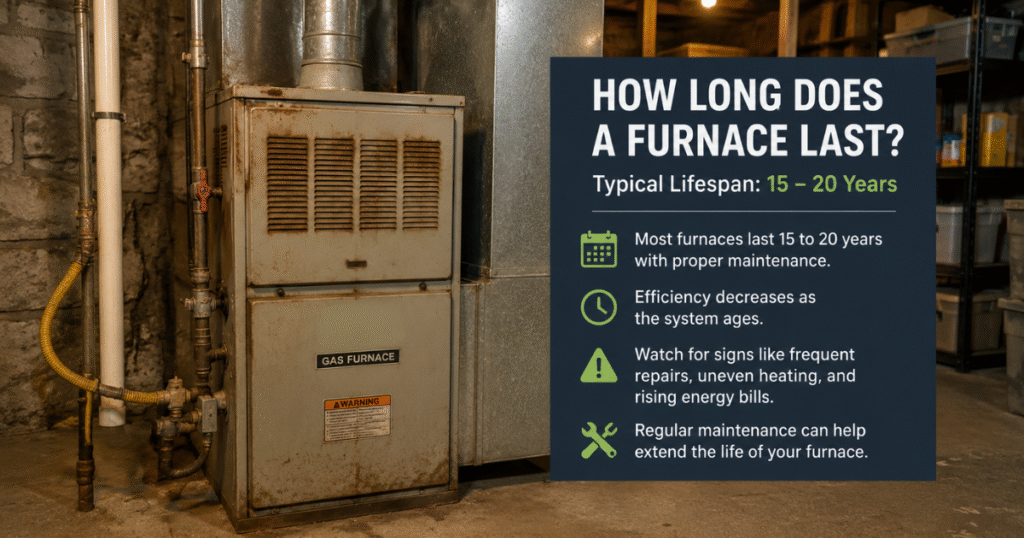
How long does a furnace last? In Pennsylvania, a well-maintained gas furnace lasts about 15 to 20 years, with a median service life near 18 years. Electric furnaces run longer at 20 to 30 years, and oil furnaces last 15 to 25 years. Age combined with rising repair bills is the clearest sign it is time to replace. This guide answers the lifespan question in full and walks through 7 expert signs your furnace is telling you its time is up.
The 3 things to know
- A gas furnace lasts 15 to 20 years in PA, electric 20 to 30 years, and oil 15 to 25 years, with regular maintenance pushing each toward the top of its range.
- The single most urgent sign to replace is a cracked heat exchanger, because it can leak carbon monoxide, an odorless gas that every gas-heat home needs alarms for.
- Use the 50 percent rule: if a repair costs more than half the price of a new furnace and yours is over 15 years old, replacement is usually the better value.
Not sure if your furnace is near the end? Tapper Energy gives honest assessments across Harrisburg and Central PA. Call (717) 921-4822 or request service online. Maintenance plan customers get 24-hour emergency service.
Table of Contents
- How Long Does a Furnace Last in PA?
- Sign 1: Your Furnace Is Over 15 Years Old
- Sign 2: Repairs Are Getting Frequent and Expensive
- Sign 3: Your Energy Bills Keep Climbing
- Sign 4: Some Rooms Never Get Warm
- Sign 5: The Furnace Is Making Strange Noises
- Sign 6: The Burner Flame Is Yellow, Not Blue
- Sign 7: There Is a Cracked Heat Exchanger
- What Affects How Long a Furnace Lasts
- How to Make Your Furnace Last Longer
- FAQ: How Long Does a Furnace Last
How Long Does a Furnace Last in PA?
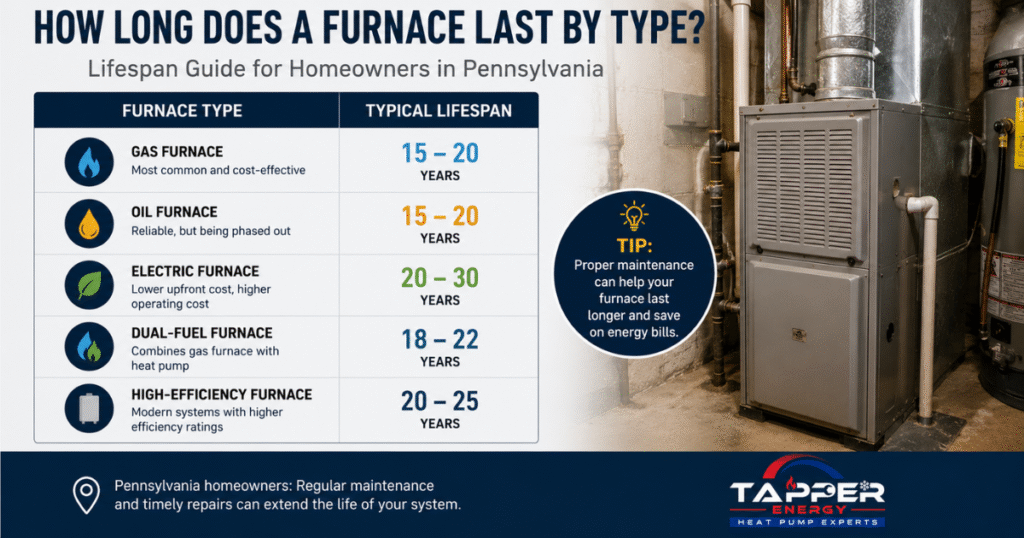
How long does a furnace last in PA depends mostly on the fuel type and how well it has been maintained. A gas furnace lasts 15 to 20 years, with industry modeling putting the median around 18 years. Electric furnaces last longer, 20 to 30 years, because they have no combustion process to wear down parts. Oil furnaces fall in between at 15 to 25 years.
| Furnace type | Typical lifespan | Why |
|---|---|---|
| Gas | 15 to 20 years | Combustion wears burners and heat exchanger over time |
| Electric | 20 to 30 years | No combustion, fewer parts under stress |
| Oil | 15 to 25 years | Depends heavily on fuel quality and cleaning |
Central PA adds a wrinkle to the answer. Our winters are long and cold, so furnaces here run hard for four to five months a year, which pushes many toward the lower end of their range unless they are maintained every fall. In our service calls across Harrisburg, Mechanicsburg, and Camp Hill, the furnaces that reach 20 years are almost always the ones that got a yearly tune-up. Below are the seven signs that answer how long does a furnace last for your specific unit.
Sign 1: Your Furnace Is Over 15 Years Old
Age is the first thing to check when you ask how long does a furnace last, because it frames every other sign. Once a gas furnace passes 15 years, it is in the replacement conversation, and past 20 it is on borrowed time. You can find the install date on a sticker inside the cabinet or in your service records.
An older furnace is not just more likely to break down. It is also far less efficient than a modern high-efficiency furnace, so even a working 18-year-old furnace is quietly costing you more every winter than a new one would.
Sign 2: Repairs Are Getting Frequent and Expensive
One repair is normal. A pattern of repairs is a message. When you are calling for service every season and the bills are stacking up, the furnace is answering how long does a furnace last in its own way: not much longer. This is where the 50 percent rule helps: if a single repair costs more than half the price of a new furnace, and the unit is over 15 years old, replacement is the better long-term value.
Repairs also tend to cluster near the end of a furnace’s life, so a costly fix this winter is often followed by another next year. Putting that money toward a new, efficient system usually pays off faster than patching an aging one.
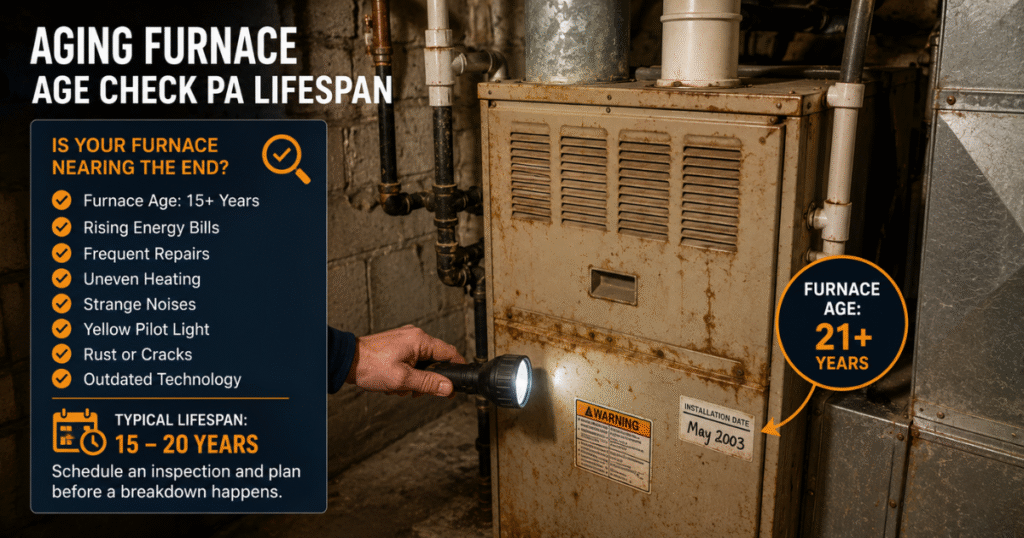
Sign 3: Your Energy Bills Keep Climbing
If your heating bills rise winter after winter while your habits stay the same, an aging furnace is a likely cause and a practical clue to how long does a furnace last in your home. As burners, the heat exchanger, and the blower wear down, how long does a furnace last drops because it burns more fuel to deliver the same heat, so you pay more for less comfort.
Compare a few winters of bills side by side. A steady climb that maintenance does not fix is a strong sign the furnace is near the end of how long it can run efficiently, and a modern high-efficiency replacement can claw back a meaningful share of that cost.
Sign 4: Some Rooms Never Get Warm
When certain rooms stay cold no matter what the thermostat says, the furnace may no longer be able to move heat evenly through the house. Uneven heating points to a furnace losing capacity and nearing the end of how long does a furnace last, though it can also involve ductwork, so it is worth a professional look.
As a furnace ages, it struggles to keep up with the demand of a cold Central PA night, and the rooms farthest from it feel it first. Persistent cold spots are one of the everyday signs that answer how long does a furnace last in practice: until it can no longer heat your whole home comfortably.
Sign 5: The Furnace Is Making Strange Noises
Banging, rattling, screeching, or booming sounds are not normal and often signal worn or failing parts. A loud boom on startup can mean delayed ignition, a screech can point to a blower motor bearing, and persistent rattling can be loose components. In an older furnace, these noises frequently mark the beginning of the end.
New sounds are worth a prompt inspection. Some are cheap fixes, but on a furnace over 15 years old they are often a sign that major parts are wearing out together, which shortens how long does a furnace last and brings replacement into the conversation.
Sign 6: The Burner Flame Is Yellow, Not Blue
A healthy gas furnace burns with a crisp blue flame. A yellow or flickering flame means the fuel is not burning cleanly, which wastes energy and, more importantly, can produce carbon monoxide. Soot or scorching around the furnace is a related warning sign.
This is a safety issue, not just an efficiency one. If you see a yellow flame or soot, have the furnace inspected promptly, and make sure your carbon monoxide alarms work. Learn what to watch for in our guide to carbon monoxide furnace leak signs in PA.
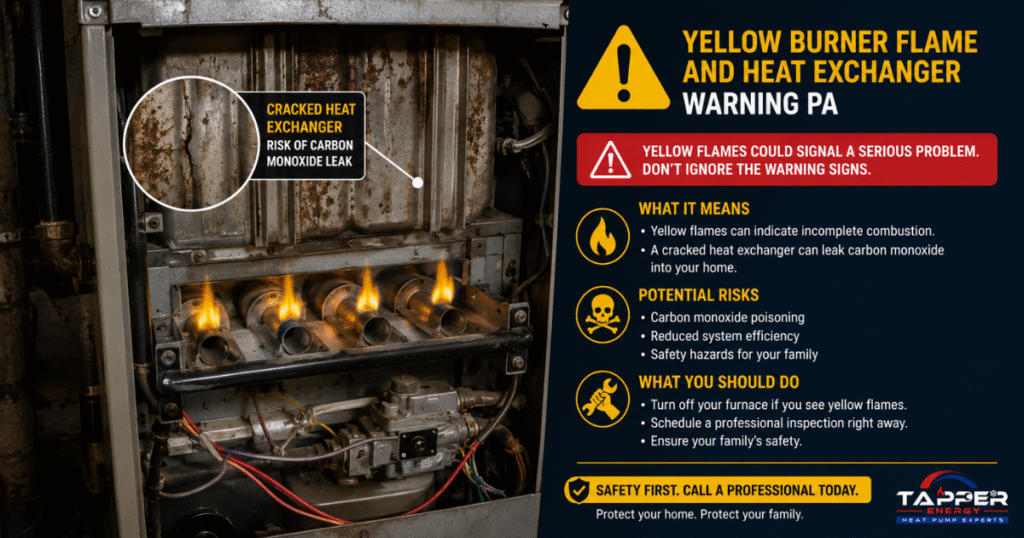
Sign 7: There Is a Cracked Heat Exchanger
A cracked heat exchanger is the most urgent sign on this list. The heat exchanger separates combustion gases from the air you breathe, so a crack can leak carbon monoxide into your home. When a technician finds one, the furnace should be shut down until it is repaired or, on an older unit, replaced.
Because a heat exchanger repair is expensive and the part is central to the furnace, a crack on a furnace over 15 years old almost always means replacement is the safer, smarter choice. This single sign can end the how long does a furnace last question on its own, regardless of the other six.
What Affects How Long a Furnace Lasts
Two furnaces of the same age can be in very different shape, because how long does a furnace last depends on more than the calendar. The biggest factors are maintenance, correct sizing, installation quality, and how hard the furnace has to work. A furnace that gets a yearly tune-up, has a clean filter, was sized correctly for the home, and was installed well can reach the top of its range. One that was neglected, oversized, or poorly installed often fails years early.
This is why the honest answer to how long does a furnace last in PA is a range, not a single number. In our experience across Harrisburg-area homes, maintenance is the factor homeowners control most, and it is the one that most reliably adds years. If your furnace is aging and you are weighing your options, our HVAC repair vs replace guide walks through the decision in detail.
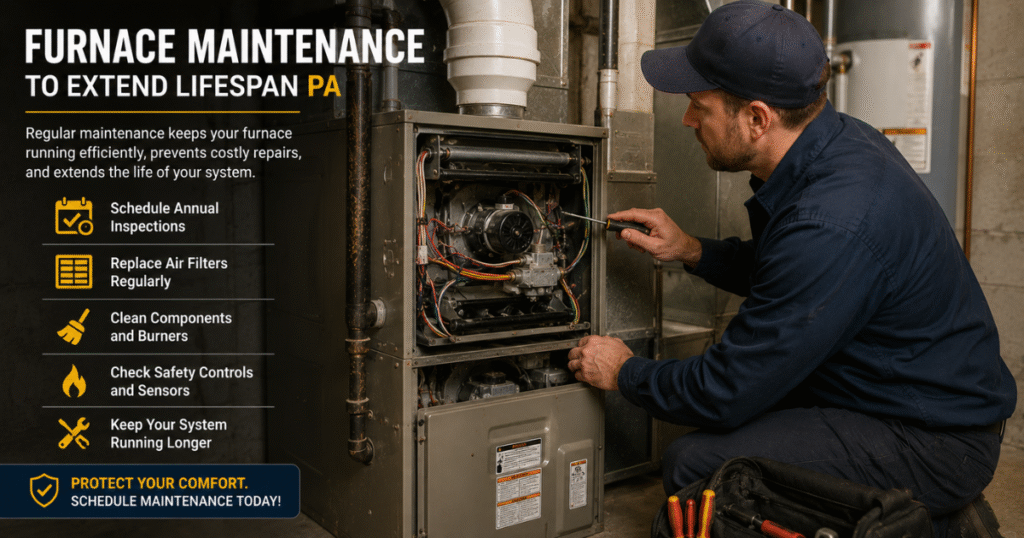
How to Make Your Furnace Last Longer
You have real control over the answer to how long does a furnace last. The two habits that matter most are simple: change the air filter every one to three months so airflow stays strong, and get a professional tune-up every fall, the kind of routine maintenance ENERGY STAR recommends, so worn parts are caught and cleaned before winter. A clean, well-tuned furnace runs cooler, burns cleaner, and lasts longer.
A few more steps help: keep the area around the furnace clear, seal obvious duct leaks, use a programmable thermostat to reduce needless run time, and test your carbon monoxide alarms twice a year. A maintenance plan bundles the yearly service and keeps your system on schedule, and Tapper Energy maintenance customers get 24-hour emergency service. These habits directly shape how long does a furnace last, the difference between one that quits at 14 and one that runs past 20.
How Long Does a Furnace Last Compared to Other HVAC Systems
It helps to see how long does a furnace last next to the rest of your home’s equipment, because these systems rarely wear out at the same time. Knowing each lifespan lets you plan replacements instead of reacting to them.
| System | Typical lifespan |
|---|---|
| Gas furnace | 15 to 20 years |
| Central AC | 15 to 20 years |
| Heat pump | 12 to 15 years |
| Water heater (tank) | 8 to 12 years |
| Boiler | 15 to 30 years |
Because a furnace and AC are often installed together and share a similar lifespan, many Central PA homeowners find both aging at once, which is when replacing them as a pair can save on labor. Your water heater usually needs attention sooner. Mapping these dates out turns how long does a furnace last from a worry into a simple planning exercise you control.
Planning Ahead as Your Furnace Ages
Once your furnace passes 15 years, it is smart to start planning rather than waiting for a January failure. Get an honest assessment during your fall tune-up, ask the technician for a realistic estimate of how long does a furnace last given its specific condition, and budget for a replacement in the next few seasons. Planning ahead means you can shop in the milder off-season, compare efficiency options at your own pace, and avoid the premium and pressure of an emergency replacement when the heat quits on the coldest night of the year.
The bottom line: how long does a furnace last comes down to fuel type, maintenance, and honest attention to the seven signs above. A gas furnace that is past 15, costing more to run, and needing repairs is telling you its time is near, and a cracked heat exchanger settles the question on the spot. Keep up with yearly service and you will get every year your furnace has to give. When the signs stack up, plan the replacement on your terms instead of letting a failure decide how long does a furnace last for you.
FAQ: How Long Does a Furnace Last
How long does a furnace last on average?
A gas furnace lasts about 15 to 20 years on average, with a median service life near 18 years. Electric furnaces last longer at 20 to 30 years because they have no combustion, and oil furnaces last 15 to 25 years. Regular maintenance pushes any furnace toward the top of its range, while neglect can cut years off.
How long does a furnace last in a cold climate like PA?
In a cold climate like Pennsylvania, furnaces often land at the lower end of their range because they run hard for four to five months a year. A gas furnace here typically lasts 15 to 18 years unless it gets a yearly fall tune-up, which is the single best way to reach 20 years. Heavy winter use makes annual maintenance especially important.
Is it worth repairing a 20-year-old furnace?
Usually not, if the repair is major. At 20 years a gas furnace is past its typical lifespan, so investing in an expensive repair often means paying to keep an inefficient, near-end-of-life unit running. The 50 percent rule applies: if the repair costs more than half a new furnace, replacement is the better value.
What is the most common reason furnaces fail early?
Neglected maintenance is the most common reason furnaces fail before their time. Without yearly service and regular filter changes, dust builds up, parts overheat and wear, and small problems go unnoticed until they cause a breakdown. A furnace that is oversized or poorly installed also tends to fail early because it cycles too often.
How do I know when to replace my furnace?
Replace your furnace when it is over 15 years old and showing several of these signs: frequent repairs, rising bills, uneven heating, strange noises, a yellow flame, or a cracked heat exchanger. A cracked heat exchanger alone is reason to replace an older furnace, because of the carbon monoxide risk. When people ask how long does a furnace last, this is the sign that can end the answer early. A technician can confirm where yours stands.
Can regular maintenance really extend furnace life?
Yes. A yearly professional tune-up plus regular filter changes is the most reliable way to extend how long a furnace lasts. Maintenance keeps airflow strong, catches worn parts early, and keeps combustion clean, all of which reduce stress on the system. Many furnaces that reach 20 years do so because they were serviced every fall.
Get an Honest Read on Your Furnace From Tapper Energy
If your furnace is aging and you are wondering how much life it has left, do not guess. Tapper Energy is family-owned and local, and we give honest assessments across Harrisburg, Mechanicsburg, Camp Hill, and the rest of Central PA, so you know whether to maintain, repair, or plan for replacement.
Call (717) 921-4822 or request service online. Ask about our maintenance plan, which helps your furnace reach the top of its lifespan and includes 24-hour emergency service.
Written by the Tapper Energy HVAC team. Our technicians diagnose and repair furnaces, AC systems, boilers, and heat pumps across Harrisburg, Mechanicsburg, and Central PA.